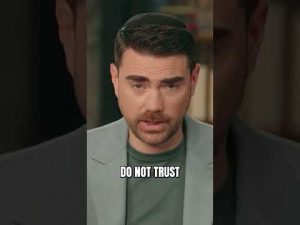
In a recent interview with the New York Times, Scott Pelley, a long-time journalist known for his role at CBS News, attempted to present himself as a beacon of integrity in a sea of media bias. He claimed that over his decades-long career, he had never encountered political bias in journalism—except, of course, when discussing the work of Barry Weiss. This assertion is a classic case of a media personality living in a bubble, detached from the reality that everyday Americans have long recognized.
Pelley’s portrayal of himself as a “real man of the people” was punctuated by a rather theatrical scene: him gazing pensively from a boat, an American flag billowing in the background. One might wonder if he was auditioning for a role in a cinematic remake of an American dream. Unfortunately, this is not a movie script but a journalist attempting to distance himself from the perceptions of a disenchanted public. Today’s reality check shows that trust in mass media has sunk to a dismal low, with only 28% of Americans expressing trust in news organizations, according to a recent Gallup poll.
For decades, beginning with the post-Watergate boom where trust peaked in the 70s, American confidence in the media has plummeted as more people have come to view the press as anything but objective. Pelley’s comments suggest that he believes CBS has remained an island of impartial journalism, but can anyone honestly agree with that presumption? The notion that his network or others like it conducted their reporting without bias is not just misleading—it’s almost laughable. Trust is built on transparency, not platitudes, and it seems Pelley is still searching for that elusive golden anchor.
The journalist also described the current state of media as chaotic, stating that it lacks “adult supervision.” Who better to play this role than someone who has read headlines off a teleprompter for decades? In Pellley’s world, it seems, simply having years of experience in front of a screen qualifies an individual to claim expertise about everything else—even if that experience is largely about delivering the news rather than reporting it. Who knew that wearing glasses could also qualify someone as a thought leader in journalism?
The irony of Pellley’s assertations is striking. While he calls for adult supervision in the industry, he fails to recognize that many Americans have already taken on the role of vigilant overseers. They are actively questioning what they read and watch, demanding accountability from sources that seem more interested in narrative crafting than objective reporting. The real adults in the room are those voters and viewers who are no longer satisfied with the information fed to them; they are now hungry for genuine, unbiased discourse.
Perhaps Scott Pelley should take a step back from the boat scenery and focus on the realities faced by the public. Reassessing the current political landscape rather than pointing fingers may just be the kind of supervision that journalism desperately needs. In the age of information, it’s the people who will ultimately steer the ship toward a clearer, more trustworthy horizon.