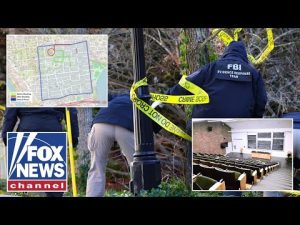
In a startling turn of events at Brown University, what was supposed to be an ordinary day on campus turned into a scene straight out of a thriller novel. The unraveling story involves a mysterious shooter who managed to penetrate the hallowed halls of this Ivy League institution, leaving both students and faculty in shock. As the dust begins to settle, it seems this incident is not just any random act of violence but a tangled web of mysteries and missed cues that demands a much closer look.
The situation unfolded in broad daylight, and yet, the details around the shooting remain as clear as mud. Questions are swirling around faster than a Twitter storm, with eye-witnesses claiming to have seen the shooter with a long gun, but strangely no bullets sprayed in certain directions they seemed like they might. Was this an intentional act, a random spree, or maybe something else altogether? The kicker here is that in an age of relentless surveillance, with over 800 cameras on a single campus, the grainiest footage seems to hold the best evidence.
Eyewitness accounts are just one part of the puzzle. The university president’s alarming oblivion to key developments, including their own website going down, only adds to the convoluted state of affairs. It’s like expecting to see a blockbuster movie on opening night, only to realize the ticket clerk has no idea what you’re talking about. For an institution that prides itself on intellectual prowess, the lack of real-time response and transparency is nothing short of baffling, leaving one to wonder if the head honcho was attending a seminar on how not to lead during a crisis.
In the backdrop of this mystery lies the maze of access points on campus. Reports suggest one needs a swipe card to enter the building where the shooting took place. Was this area breached through a security loophole or, more intriguingly, did the shooter have legitimate access? If so, does that mean someone in the inner circle had a vendetta, or was it just a disgruntled student with an axe to grind? Moreover, let’s not overlook the issue with international students—why, of all times, has this become a point of contention? Could it be an attempt to twist the narrative, or is there really something more here?
And then there is the critical dimension of real-time investigation—or the glaring lack of it. Despite the community’s knack for vigilance, it appears the police force wasn’t in any rush to collect neighborhood evidence. This delay could be likened to a detective deciding to finish their morning coffee before attending the crime scene. If the answers were as easy to spot as the nearest donut shop, maybe we wouldn’t still be huddled around the news, scratching our heads.
In the end, if there’s one takeaway from this whirlwind of a story, it’s a stark reminder of what happens when bureaucracy collides with crisis management. The event has unfolded like some unscripted drama series, complete with plot twists and a host of unanswered questions. And who knows, by the time they figure this all out, the only lesson learned might well be that when you mix a prestigious educational institution with a security fiasco, you get a head-scratching story that might teach us more than any college lecture on advanced criminology ever could.