In the latest saga of the ongoing debate over law enforcement and immigration, Minneapolis finds itself at the center of attention once more. This time, it’s an incident involving Immigration and Customs Enforcement (I.C.E.) that has sparked protests, leading to further polarization. Following a routine traffic stop that turned into a confrontation, an I.C.E. officer shot an individual after an alleged attack. As expected, local leaders chimed in with their usual rhetoric, prioritizing political correctness over law and order.
The issue began when federal law enforcement, performing their duty, tried to arrest an illegal immigrant from Venezuela who was apparently enjoying the hospitality extended by current immigration policies. When the subject attempted to flee and crash his vehicle, he not only endangered his own life but jeopardized others around him. Attempting to evade arrest, he was confronted by enforcement agents. However, as the situation escalated, additional individuals joined the melee, using whatever they could grab—including shovels or broomsticks—to make the officer’s job even more hazardous.
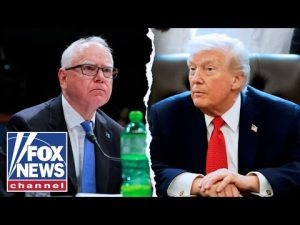
While the incident sounds like a scene out of a poorly written action movie, it’s the aftermath that truly entertains. The predictable outcry from politicians, particularly Minnesota’s Governor Walz and Mayor Frey, was swift. Their responses served up the usual blend of indignation and finger-pointing, conveniently directed at anyone but themselves. Walz, perhaps still nostalgic for the chaos of 2020, offered some choice words urging the public to focus their anger towards Donald Trump instead.
Talk about diverting responsibility! Rather than directly addressing the attacks on law enforcement and the breakdown of peace, these leaders chose to deflect and resist cooperation with federal entities. It’s almost as if they believe fervently defending ‘resistance’ over collaboration will somehow put out the fires—or maybe they’re simply betting on the excitement and drama of unrest to distract from their state’s numerous other issues.
Moreover, the protests that erupted in response to the incident have not only affected law enforcement but extended to sensitive document security. I.C.E. files were tossed around like confetti in the streets, likely providing a field day for any local wannabe-spies on the lookout for scandalous tidbits. Despite this clear breach of federal law and a threat to national safety, local officials conveniently omit any mention of these actions when addressing their constituents. Perhaps they’re waiting for the heat to die down—or maybe they assume selective memory will serve their political careers better in the long run.
In a world where accountability seems like a relic of the past, the streets of Minneapolis once more host the call for resistance. The administration, on its part, maintains its stance of cooperation—offering an olive branch to reduce agents on the streets in exchange for cooperation. Yet the question remains: will these leaders attempt a new tune of unity and collaboration, or stick to their old anthem of ‘resist and deflect’? Time—and perhaps a few more protests—will tell. The people of Minneapolis, and indeed the nation, are watching.