**The Federal Reserve: Where Elected Officials Go to Watch the Show**
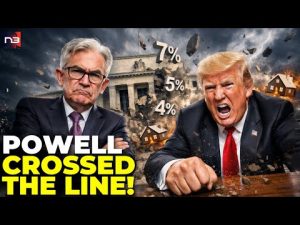
In a stunning display of defiance, Jerome Powell, the chair of the Federal Reserve, firmly stood his ground against the demands of none other than former President Donald Trump. In a meeting that many are calling a spectacle of epic proportions, Powell chose to keep interest rates steady between 3.5% and 3.75%, much to the chagrin of his former boss, who had been clamoring for cuts. Two governors who were appointed by Trump even sided with Powell in this monetary showdown, raising eyebrows and prompting whispers of a deeper rift within the ranks of economic leadership in America.
This clash isn’t just about numbers; it’s an all-out brawl between the executive branch and what some are dubbing the banking “cartel.” That’s right, folks! An unelected official has told the man voted into the highest office to take a backseat when it comes to economic policy. The implications are huge. While you may be feeling the pinch of higher borrowing costs on your mortgage, Wall Street has been celebrating with the S&P 500 hitting all-time highs. It appears that the elite enjoy having money expensive enough to keep the average Joe out of the investment game. Talk about a twist!
Powell’s firm stance sends a clear message: the decisions made by the Federal Reserve are not up for grabs by those who have been voted into office. Instead, it’s the unelected bureaucrats—like Powell—who hold the keys to the kingdom. This leaves many wondering just how much power you, as a voter, actually wield. Your struggles with mounting debt and increasingly costly mortgages underscore a chilling reality: the Fed’s independence may be an open invitation for the deep state to commandeer the country’s economic future.
Things are not just turbulent in the world of interest rates. The recent development at the Department of Energy deserves a raised eyebrow or two. The government has greenlit a whopping $2.7 billion in contracts to revive domestic uranium enrichment capabilities, something the U.S. desperately needs. You see, America consumes a staggering 50 million pounds of uranium each year but produces less than 5%. This reliance on foreign suppliers—hello, Russia—places American energy independence in a precarious position. As the nuclear power industry surges and defense demands rise, the need for local uranium will only amplify, leaving industries and investors racing to position themselves for potential gold—or rather, uranium—rush.
Now, while the chaos unfolds in Washington and Wall Street, Powell’s recent comments about the economy reveal a contradiction. Despite pressures from Trump, Powell maintains that the overall economic landscape is holding strong. Unemployment shows signs of stabilization, oil prices are down, and the markets are reacting favorably. So why, then, the hesitance to cut rates? The answer lies in control. Powell appears to be sending a message that the Federal Reserve is not beholden to external pressures, even if they come from former presidents.
As the dust settles from this dramatic meeting, one thing is crystal clear: the Federal Reserve is strutting its authority like a peacock, leaving Trump and his supporters feeling sidelined. And Powell’s term continues until 2028, meaning he could very well continue this power play throughout a potential second Trump presidency. For the average American, this means continued economic struggles while those behind closed doors orchestrate the financial future of the nation. The time has come for a serious discussion about who should really be in charge of our monetary policy: the people we elect or the banking elite who seem to pull the strings? It’s a question every American should ponder. Meanwhile, as we watch the fireworks unfold, remember that real wealth doesn’t just come from stocks—it comes from the essential resources that can secure our future.