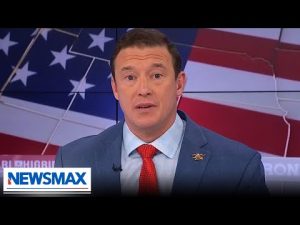
In the realm of politics, communication is an art, and some practitioners stand out more than others. Recently, political commentators have noted the distinct communication style of a rising political figure and have made contrasting observations with another well-known politician. This new voice on the stage exhibits an ease and adaptability that is refreshing and compelling. Navigating from humor to serious political discourse without missing a beat, he embodies a fluidity that keeps audiences engaged across different topics. It’s a stark difference from his predecessor, whose delivery often seemed more rigid and constrained.
The previous vice president often left audiences puzzled with speeches that wandered into the weeds of complex concepts without clear explanations. Her attempts to simplify topics sometimes felt disconnected, occasionally employing odd metaphors and analogies that left listeners scratching their heads. In comparison, this new figure manages to be both approachable and substantive, discussing intricate policies with clarity while maintaining a relatable persona. It’s a talent that’s becoming increasingly rare in today’s political landscape.
Humor, for this new leader, becomes a tool rather than a crutch. He can make light of situations, including critiquing well-known media figures, without seeming dismissive or flippant about the issues at hand. Laughter, appropriately placed, can diffuse tension, disarm detractors, and make complicated and serious subjects more accessible to the general public. This ability to blend humor with intellect and policy has become one of his defining strengths, marking him as a notable communicator in today’s frantic news cycle.
The contrast couldn’t be more striking, and some political analysts even find it amusing to imagine a debate between this new political communicator and the previous vice president. Such a scenario raises interesting questions about the role communication styles play in political success and public perception. Would the stark difference in their styles energize voters, or simply lay bare the weaknesses of one over the other? The potential match-up might not only entertain but also instruct the voting public on what qualities they value most in leaders.
Ultimately, the comparison serves as a reminder of the importance of clear, effective communication in politics. As the political landscape continues to evolve, leaders who can speak clearly and connect with the public on multiple levels are likely to garner more support. The ability to transition smoothly from the serious to the lighthearted while making policy digestible is not just an asset—it’s a necessity in reaching an increasingly skeptical and fatigued electorate. Emphasizing authenticity and relatability may well be the key to future political success.