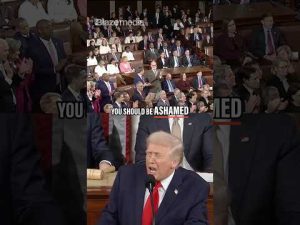
In recent developments, the United States is continuing its complex dance with Iran, hinting at a tough stance while still clinging to hopes of diplomacy. Amidst a backdrop of rising tensions, President Trump has unequivocally stated that Iran must not develop nuclear weapons, firmly reiterating this stance during a recent address. The clear message is that under no circumstances will the U.S. allow Iran—the world’s leading sponsor of terror, according to Trump—to possess nuclear weapons. With nuclear talks sparked anew in Geneva, Switzerland, both countries are seemingly walking on thin ice, balancing the thin line between diplomacy and potential conflict.
In a move that can only be described as strategic theatrics, the U.S. has reinforced its military presence by deploying F-22 fighter jets in Israel. The arrival of these aircraft, usually stationed in the United Kingdom, can be seen as both a gesture of assurance to allies and a warning to adversaries. Meanwhile, the USS Gerald R. Ford aircraft carrier is making its way to the Eastern Mediterranean, underscoring the seriousness of the situation. In the waters near Iran, an impressive setup of Navy ships and bases in neighboring regional countries further underscores the precarious nature of this geopolitical chess match.
Iran, on the other hand, is not just watching the skies. They are running their own military drills, involving various units and capabilities, fine-tuning strategies to respond to perceived threats. Their foreign minister has made bold assertions that the country remains committed to not developing nuclear weapons, insisting on their right to use nuclear technology for peaceful means. But of course, these assurances have been heard before, leaving many skeptical about their intentions.
As the nuclear talks in Geneva kick into gear, the tension is palpable. Analysts view these discussions as potentially the last chance to steer clear of a direct conflict. One can almost imagine the pressure weighing on the negotiators, like a kettle about to boil over. The timing, coupled with the military posturing, paints a picture of a scenario that could either end in diplomatic success or escalate into something far more dire.
Back home, a swirling mix of secrecy and speculation surrounds the government’s internal briefings. Senatorial meetings behind closed doors raise questions about transparency, with concerns expressed over the level of seriousness of the situation. There’s talk about the president needing to make his case—not to Congress, mind you—but directly to the American people. It seems even the political heavyweights, normally so confident in their ivory towers, are somewhat shaken by what’s unfolding. As the world watches closely, waiting to see if the U.S. will be drawn into yet another conflict, one might wonder if there is a real plan or just a multitude of aspirations and good intentions on the table.