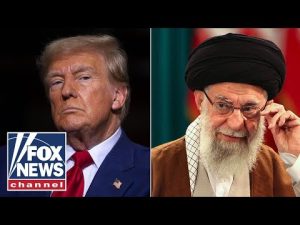
In a dramatic twist in the ongoing narrative about Iran’s political landscape, whispers of succession plans within the regime are making waves. While many have their eyes fixed on the notorious figures like Kami, it’s actually Massud Peshkan who holds the title of Iran’s technically elected president. Despite the veil of secrecy that often surrounds regimes like that of Iran, there seems to be a clear chain of command that’s ready to respond to any challenge. This recognition, or perhaps realization, sends a ripple of psychological power to the coalition aligning with the United States and Israel.
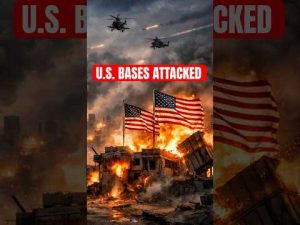
This revelation seems to bring a sense of confidence to the U.S.-Israeli coalition, suggesting that should tensions escalate, there is a structured response waiting in the wings. The Islamic Revolutionary Guard Corps (IRGC) might want to take note; the stakes are extraordinarily high. It feels like the proverbial sword is hanging over their heads, with the U.S. and Israel positioned to strike if they decide to take a bold step forward. The implications are profound, especially considering the current climate of unrest within Iran.
Now, while some might have faith in the assurances of immunity that former President Trump has put forth for potential surrenders, the reality on the ground is a bit more complex. The nation’s citizens, long oppressed under the regime’s iron fist, may not be so forgiving. History is ripe with tales of leaders meeting a rather undignified end; the people of Iran are likely taking note. It seems that the populace is just as crucial in this equation and could become a wild card.
But how might the people of Iran actually mobilize to reclaim their government? The challenge of mounting an armed uprising is indeed daunting. Firearm ownership is not as widespread as one might think. Instead, hunting shotguns are the norm for the few who can legally obtain them, mostly farmers and some hunters. There’s also a diverse ethnic tapestry in play, with certain regions—like the Arabs in the southwest and Kurds in the north—having somewhat more access to firearms, thus making the possibility for armed resistance complicated.
Perhaps the focus should shift towards the Artesh, often overshadowed by the IRGC. This army is seen as the voice of the people, unlike the ideologically driven IRGC. Should the Artesh decide they’ve had enough, they could become the heroes of this narrative. A potential uprising might not be a flashy rebellion but rather a quiet and steadfast movement led by those who truly seek change. After all, when the army of the people decides enough is enough, it could be a momentous shift for Iran.
As the world watches, the stage is set and a possible transformation looms on the horizon. The people of Iran might just be waiting for the right moment to make history. If they do, one thing is for sure—they are likely to have a lot to say about their future, and it just might be a story worth telling for generations to come.