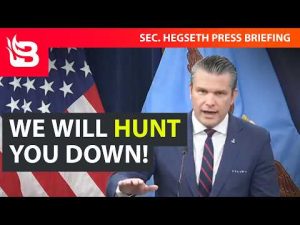
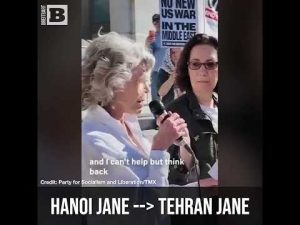
In the unfolding saga of international tensions, recently the focus has shifted dramatically to the Middle East, where Operation Epic Fury has been launched by the United States against Iran’s terror regime. It’s only day three, but the intensity of the operation highlights the significant strategic shift in global politics. The military’s robust and synchronized efforts remind the world of America’s capability to project power when and where it is deemed necessary. As the United States and its allies engage in a carefully coordinated operation, they aim to prevent Iran from expanding its influence beyond its current borders. And yes, it seems the old adage still holds true—sometimes, power is the best deterrence.
The situation has become a complex web of military maneuvers across land, air, sea, and even cyberspace. The United States, with an armada of military resources, has already struck over a thousand targets in Iran, focusing on disrupting Iran’s combat operations. Major Iranian figures have reportedly been eliminated, reshaping the leadership landscape in Tehran. The ripple effects are felt across the globe as allies and adversaries alike wait to see what unfolds. The strategic deployment includes heavy hitters such as the Lincoln and Ford carrier strike groups, whose presence is enough to make even the most bullheaded adversary think twice.
However, Iran, infamous for its complex chess moves in regional politics, isn’t taking things lying down. Despite the overwhelming might they face, Iranian forces have managed to retaliate with missiles targeting Israel and various Gulf countries. Hezbollah, a formidable proxy of Iran, has joined the fray, launching attacks on Israel from Lebanon. The stakes are high and the game is complex, but the message is clear: the more Iran extends its reach, the fewer friends it finds down the road.
Adding to the complexity, Israel has been actively engaged in the operation, launching strikes on Iranian and Hezbollah positions. The focus isn’t just on the military front; political gamesmanship is at play as well. Gulf nations such as Saudi Arabia and the UAE have found themselves drawn into the conflict after their civilian areas were targeted, and their previously neutral stance has shifted as a result. The landscape in the Middle East is one where today’s adversary can be tomorrow’s ally, or vice versa, at the whim of a missile strike.
The operation also highlights a critical element of modern warfare—technology. While traditional military forces play a crucial role, cyber operations and space command have been pivotal in the initial stages of this conflict. The precision and surprise of these initial technological strikes underscore a new era of warfare where software might outweigh hardware. As the situation develops, it becomes increasingly clear that the world is witnessing not just a battle of might, but a battle of wits, innovation, and who can outmaneuver whom in this high-stakes, real-world chess game. Surely, this isn’t just a show of force; it’s a statement—a declaration that when pushed to the limits, the United States and its allies will act decisively to protect their interests and those of their regional partners.