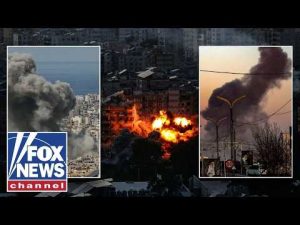
The United States and Israel are upping the stakes in their ongoing military operations, now entering the second phase of an ambitiously named “Operation Epic Fury.” This phase turns its focus squarely on dismantling Iran’s missile program. The Israeli military is already juggling a complex two-front war, going head-to-head with Iran and the militant group Hezbollah. For Israel, this might seem like a chance to address some longstanding grievances with Hezbollah, but the situation demands more than just enthusiasm—it requires strategic finesse.
In a nighttime blitz over Tehran, Israel launched an audacious attack using around 50 fighter jets and 100 munitions. The target was a bunker, previously thought to be a hideout for Iran’s former Supreme Leader. In a move that probably left Iranian planners scratching their heads, the leader remained above ground, unaware of the impending airborne assault. The Israeli airstrike delivered a powerful message—one that Iran surely received loud and clear. Prime Minister Benjamin Netanyahu isn’t wasting any time, huddling with top security officials in Israel as they approach the conflict’s week-long mark.
However, it’s not all smooth flying for the Israelis. Their country faces a relentless barrage of ballistic missiles and cluster munitions that light up the night sky over Tel Aviv. Many of these rockets are more notable for their missed-than-hit rates, often plunging into the Mediterranean. Despite this, Israel’s offensive actions have not dwindled. Their air force decisively fired back by targeting six missile launchers the previous night. What makes matters interesting is the apparent shoulder-to-shoulder collaboration between Israel and the United States. They share not only military objectives but also an unmistakable camaraderie, further isolating Iran from its position of regional muscle-flexing.
Meanwhile, Iran’s northern neighbor Lebanon finds itself in an unenviable spot. Hezbollah, the Iran-backed militant group, remains a thorny issue for both Lebanon’s leaders and the Israeli military. Tensions have been visibly mounting, with Israel executing 26 rounds of strikes against Hezbollah positions. Civilians from southern Beirut’s Dhaka neighborhood are caught in the crossfire, leading to mass evacuations and a grim outlook for those displaced. The Lebanese government has taken an unexpected hardline stance, now even considering arrests for anyone linked to Iran’s IRGC. In a not-so-distant past, such assertions might have been dismissed as idle chatter, but these days they are anchored in firm international pressure—particularly from Uncle Sam.
In the backdrop of these unfolding events, the air in Lebanon is thick with change, as the country’s internal divisions are laid bare. Israel makes deliberate efforts to confine its military activity to Hezbollah-dominated areas, pressing on in regions like the Beqaa Valley. Lebanon’s leadership seems amenable to ridding itself of Hezbollah’s influence, mirroring a broader regional strategy to curb Iranian clout. The Lebanese are on a precarious path, juggling the desire for national stability with external pressures and military intricacies. At stake is not only their sovereignty but also the well-being of their people—caught between foreign influences and internal aspirations.
The saga continues with many moving pieces, each requiring careful attention and strategic contemplation. While the multi-pronged conflict scales new heights, one thing is certain: the game of geopolitics is far from over. Iran, Hezbollah, Lebanon, Israel, and the United States all play crucial roles in shaping the Middle East’s future, their actions resonating far beyond their borders. Whether this operation will truly live up to its “Epic Fury” moniker remains to be seen, but it’s clear that a complex and dramatic story continues to unfold in this turbulent region.