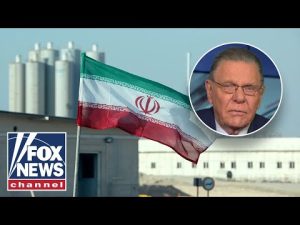
When President Trump surprised the world with a bold declaration that Iran had effectively surrendered, many raised their eyebrows, wondering if it was one of those moments where fiction seemed to overlap with reality. Iran, known for its bold stance, assumed the role of a penitent, apologizing to its Middle Eastern neighbors for past aggression. Trump’s confident announcement portrayed a scenario where Iran was forced to confront the consequences of its belligerent behavior and the relentless pressure from the U.S. and its allies.
The situation in Iran was akin to watching a classic game of chess, where the opponent, once poised and confident, starts making hasty moves. Trump described a scenario where Iran, after years of missile launches and military maneuvers across the Middle East, found itself running out of resources. The once-feared nation, with its ballistic missiles and drone swarms, experienced a visible depletion in its arsenal. Sanctions and international pressures seemed to have taken a significant toll on Iran’s ability to sustain its military endeavors.
What added a twist to this unfolding drama was the clear rift within Iran’s leadership. The political leaders sang a different tune from the military, contradicting themselves and showcasing cracks in what was once a unified facade. It seemed like the pressures and the advancing technology of the U.S. military were not only crippling Iran’s physical capabilities but also shaking the very structure of its leadership. The confusion and disarray only served to magnify the effectiveness of the U.S. strategies under Trump.
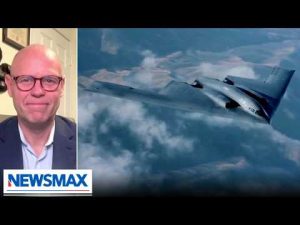
The technological prowess of the U.S. military played out like a scene from a high-stakes video game. Advanced systems, once mere PowerPoint slides in the Pentagon, were now operational, delivering powerful blows to Iran’s military machinery. The U.S. was deploying cutting-edge technology that included AI-guided systems and laser weaponry, painting a futuristic battlefield scenario. This demonstration of American military strength was not just a frontal assault on Iran but also a loud declaration to the world about the dominance of U.S. military technology.
In a world constantly teetering on the edge of conflict, Trump’s approach appeared to some as a recalibration of America’s international stance. The message was clear: America was no longer in the business of playing the defensive game but was setting the tone for global dynamics with a newfound aggression. Whether this marked the beginning of a new era in international politics or was merely a temporary shift in power dynamics, only time would tell. But one thing was clear, Trump’s efforts were reshaping the global chessboard, one move at a time, with Iran being the latest piece to knock over.