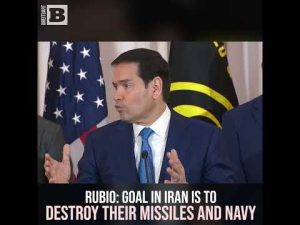
As President Trump addresses the House Republican Conference in Doral, Florida, an air of anticipation surrounds what he’s expected to say about Operation Epic Fury. He’s already chatted with CBS, claiming a swift progress that’s confounding skeptics and delighting his supporters. Trump paints a picture of a decimated Iranian military, comparing it to a house of cards that has, mostly, toppled. He insists that the so-called terror regime has only one option left: waving a white flag or merely fading into irrelevance. Confidence is high, but the president remains mysterious about who might replace Iran’s supreme leader, hinting that he has someone in mind but keeping details under wraps.
Meanwhile, the pages of criticism are open wide, with Democrats and their media allies decrying Operation Epic Fury as President Trump’s inexplicable power trip. Skeptics suggest this is imperialistic ambition unchained—classic “drunken militarism” as they call it. However, in the eyes of the cautious, it’s more of Trump’s hawkish strategy to right international wrongs. Is this mission to eliminate a bully from the schoolyard justified? The squabbling continues. On one hand, critics bemoan the decision, describing it as deploying troops without explaining the necessity, while on the other, some can’t get enough of the spectacle, nostalgically recalling the good old Putin’s price hike days.
The economic angle provides its own drama. Even as oil prices perform a dizzying dance of highs and lows, the administration seems intent on leveraging the situation. Trump reassures the masses that with European cooperation and strategic oil reserve management, he’ll keep $200 per barrel disasters at bay. The price fluctuations have been a smorgasbord for watching liberals squirm—a bit of strategic gloating here, reminiscent of those “Putin price hike” days. Democrats find themselves in a curious position, poised to battle over gas prices while maintaining their green aspirations.
As the regime scrambles to re-coup its losses, President Trump’s military strategy of engaging and dismantling rogue elements stands under scrutiny. The operation appears to be moving quickly, eroding Iran’s capabilities and leaving its strategic operations fumbling. In the hands of Deputy Commanders, their autonomous authority to wage the struggle independently is a narrative that’s ripe for conspiracy theorists and critics alike. With the son of the Ayatollah stepping into power, many anticipate similar oppressive policies—an heir apparent cast from the same mold, if you will. This so-called Ayatollah Jr. may become a contemporary figure of enduring ire, surely making social life awkward and lunch dates tentative. Texas oil giants may not want a handshake greeting quite yet.
Indeed, Trump’s actions unleash a torrent of debate over women’s rights and regime-changing consequences, where bold claims are made. Astonishingly, some conservative tongues wag at the absent applause from global feminist leagues—dubbing it Trump’s own weird version of women’s liberation. Who knew that by destabilizing a theocracy, he’d accomplish more for women’s rights than a shelf full of feminist literature and public speeches combined! The liberal left is too busy throwing its anti-war lingo into the wind than acknowledging this unintended emancipatory stroke of fate. Oh, the irony.
Amidst the din, Trump manages to raise another ethical gauntlet: urging Australians to offer asylum to Iran’s women’s soccer team in the wake of an anthem protest. It’s a move that’s ripe for discussion, with some expecting liberal icons to agree, albeit silently. It’s a complex geopolitical puzzle, painted in shades of moral compass and international intrigue. As the oil markets stabilize and the dust of criticism settles, all eyes remain on President Trump and his audacious game of global chess—a spectacle worthy of popcorn at home, perhaps. auto-subscribed news alerts, anyone?