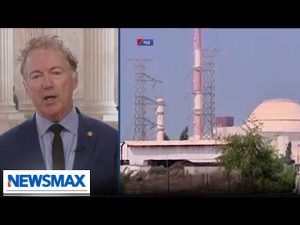
In the complex world of international diplomacy, few challenges are as formidable as those involving Iran and its nuclear ambitions. The recent discussions led by U.S. special envoy Steve Witoff highlight the intense and often frustrating dance between negotiation and national security. With six trips to Iran and multiple negotiations under his belt, Witoff’s experiences shed light on why the pursuit of a nuclear deal proved to be more like herding cats than facilitating a mutually beneficial agreement.
Witoff’s meticulous nature as the chief negotiator comes into play as he recounts his six trips before the onset of Operation Midnight Hammer. These visits took him all the way to Europe and even to Muscat. It seems like a grand adventure filled with potential, but alas, it was more akin to an episode of a sitcom where the punchline never quite lands. Despite the U.S. effort to negotiate, Witoff reveals that any real willingness from Iran to budge was like finding a unicorn. It was there in theory, but when examining the evidence, it was clear that the magical creature was nowhere to be found.
During the latest round of talks, Witoff and his team made a bold offer. They were prepared to provide Iran with free fuel for at least a decade. This would satisfy the country’s energy needs while preventing them from enriching uranium—the very act they insisted was their “inalienable right.” Yet, in what can only be described as a plot twist worthy of a Hollywood script, Iran rejected the deal. Their reasoning, despite being suspiciously flimsy, raises eyebrows. If they were really seeking peaceful energy development, why turn down a once-in-a-lifetime offer?
In those tense negotiations, Witoff found himself in some awkward situations, especially when dealing with Iran’s Foreign Minister Abisarachi. While Witoff aimed for direct communication, the foreign minister preferred to act as if he were texting a friend—somewhat evasive and indirect. So, instead of engaging in straightforward discussions, Witoff was left to navigate through layers of bureaucracy, unsure whether he was actually negotiating with the man or just shadowboxing with emissaries.
More alarming were the frank discussions about Iran’s nuclear capabilities and intentions. Witoff reported that Iran openly boasted about possessing sizable quantities of enriched uranium, a fact that sounds like a villain’s monologue in a spy movie. In their conversations, the tone shifted from polite negotiations to fiery confrontations, with the foreign minister becoming increasingly agitated when presented with serious U.S. demands. The mention of ballistic missiles illustrates just how serious the situation is—as if Iran were casually waving around a loaded weapon while insisting it was just a toy.
So where does all of this leave the United States? It appears that the door for a diplomatic solution remains ajar but just slightly, as Iran continues to play its cards close to the vest. Witoff and his team ultimately concluded that Iran wasn’t acting in good faith, which tells anyone following this saga that these negotiations are far from over. With plans to meet Israeli officials soon regarding issues that extend beyond Iran, Witoff will continue to juggle this intricate geopolitical puzzle where peace and security hang in the balance. One thing is clear: this chapter in diplomacy may not end neatly, but it’s certainly going to be one for the books.