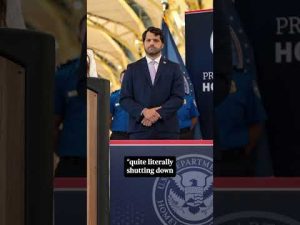
In the chaotic world of international politics, many things happen behind the scenes that the public may never fully understand. Recently, Joe Kent, the Director of the National Counterterrorism Center, resigned from his position over the ongoing conflict with Iran. He made strong allegations, suggesting that pressure from Israel and its lobbyists led the U.S. into this war. As much as some want to simplify the situation by pointing fingers at Israel, it’s crucial to consider the broader context and the responsibility of those involved.
Kent’s claims come at a sensitive time when the U.S. is in the thick of a complex geopolitical conflict. He argues that Iran posed no imminent threat to the United States and that the administration was misled by Israel. However, the nature of global security threats is rarely straightforward, and the situation in the Middle East is mired in longstanding political dynamics. Is it truly plausible to attribute the actions of a nation solely to the influence of another?
One must question the timing and motivation behind Joe Kent’s newfound morality. He served under the Trump administration during previous conflicts with Iran. His resignation surfaces questions about whether this is rooted in genuine concern or if there are other contributing factors. Moreover, allegations floated around about illegal activities, like leaking information, which could indicate a more complicated rationale for his sudden departure.
Furthermore, the focus on Israel’s influence diverts attention from the realities faced by American forces in the region. Recent reports indicate multiple attacks on U.S. troops by Iranian proxies, which signifies a present danger. To suggest that Iran is not a threat contradicts observable evidence on the ground where American interests and allies are consistently under siege. This is not just an Israeli issue; it concerns the stability and security of the region broadly.
The resignation also opens up a broader dialogue about alliances and America’s role in the world. While some NATO allies express reluctance to engage further, it’s crucial for the U.S. to maintain its leadership and cooperation with willing partners, like Israel, who share similar democratic values. Constructive international collaboration should be the goal, rather than casting aspersions that oversimplify complex relationships.
In times like these, the voices that offer pragmatic and measured responses to global conflicts are invaluable. It remains essential for leaders within and outside the government to make decisions based on a comprehensive understanding of international interests and to hold accountable those who might cloud decision-making with personal grievances. The question of Joe Kent’s resignation should prompt continued scrutiny of not just his motives but also the ongoing strategies and responsibilities of all stakeholders involved in U.S. foreign policy.