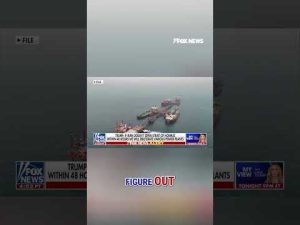
As the situation in the Strait of Hormuz unfolds, questions linger about the United States’ role in international security and the intricate dance of geopolitical relations. The Strait of Hormuz is a tiny waterway, yet crucial, as about 20% of the global oil market flows through it. While the current U.S. administration suggests that other nations reliant on this route’s oil should step up their security efforts, the idea isn’t exactly groundbreaking. In the past, operational structures like Task Force 151 have demonstrated that a multinational security group can be highly effective in patrolling troubled waters. So, the wheel doesn’t need reinventing.
Interestingly, the recent activities in and around Iran signal a troubling development brew. Iran, never shy to stir the pot, recently extended its military capabilities with longer-range missiles, possibly showing off their newest toys courtesy of the workshops in China. It’s like they’re trying to organize a surprise party that the world would actually prefer to decline. This missile advancement puts a spotlight on the tangled alliance of Iran, China, Russia, and North Korea, feeding into the concerns that these nations might just be building a private club with rather notorious intentions.
But what does all this mean for the West, particularly for the United States? The administration’s strategic strikes seem to underscore a shift from previous conflicts. The goal isn’t to repeat the errors of history but to pinpoint targets effectively. This meticulous approach appears designed to prevent entanglement in another mess like Iraq or Afghanistan. It’s nice to see some learning from past mistakes—even if it sometimes feels like watching the sequel to a movie nobody wanted to be made in the first place.
Meanwhile, critical voices from Capitol Hill have not been muted. Some Democrats argue that the administration’s strategy could leave reformers in Iran poorly positioned. A senator from Oregon, for instance, highlights concerns about unsecured uranium and lack of an exit strategy—a valid concern for anyone who’s ever seen a spy movie gone wrong. Still, others tout that with precise military action and no ground troops envisioned in Iran, the situation could unfold differently than prior engagements.
There’s a belief that Iran might actually stand a chance to hit the ground running with a new government after some strategic changes. Energy infrastructure strikes have been condemned, potentially ensuring a smoother transition for Iran’s prospective administration. Whether these moves result in a triumph for international relations savvy or just another chapter in global politics, one thing is clear: as the drama in the Strait of Hormuz continues, it’s keeping the world on its toes, popcorn in hand, and hoping for a plot twist that doesn’t involve more conflict.