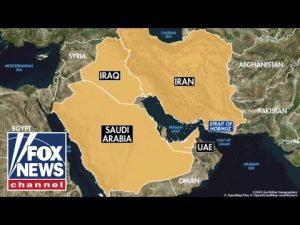
In what appears to be another chapter in the ongoing saga of Middle Eastern geopolitics, President Trump has once again made headlines by announcing a tenuous ceasefire via True Social. This ceasefire came during a tense standoff in the Strait of Hormuz—a hotspot of international navigation—where two brave vessels dared to traverse recently. While this might sound like the beginning of a maritime adventure, it unfortunately coincides with Iran’s less-than-friendly decision to bombard Tel Aviv with ballistic missiles. Clearly, the Iranians missed the memo on the ceasefire’s intended peace, opting instead to rain havoc on Israel’s second-largest city.
The ceasefire announcement seems to have been more of a suggestion rather than a strict rule, as Iran continued its military antics. Even as the sun rose over the Gulf, Kuwait had its hands full dealing with missile and drone assaults on its facilities. The UAE found itself in a similar predicament. In a rather theatrical display, Iran even targeted their own soil—an oil refinery on the island of Leavan suffered airstrikes early in the morning, keeping casualty estimates and property damage conveniently fuzzy for the media.
Meanwhile, the streets of Tehran bustled with pro-regime demonstrators giving their weekly speeches on why they think America and Israel are terrible neighbors. Shouting catchy slogans about death to the U.S. and Israel, they played their favorite pastime of burning American flags—it’s almost as if they’ve adopted it as a national sport. These demonstrations occur like clockwork, showing Iran’s dedication to keeping its grievances alive and well.
Over in Lebanon, the Israeli military responded with its own version of ‘airmail’, delivering more than a hundred airstrikes across the country, including Beirut. This synchronized series of events unfolded just as discussions of the ceasefire took precedence. Irony appears not to be lost in the theater of Middle Eastern diplomacy. Lebanese health officials, with their hands full, reported hundreds of people wounded from these strikes, painting a rather grim picture of how things look when a ceasefire is supposedly “in effect.”
Back on social media battlegrounds, President Trump’s post outlined a 15-point peace resolution, which Iran countered with their 10-point proposal. Let’s just say, some of these Iranian points read like they were culled from a wish list, including demands that stretch from the U.S. withdrawing forces to IAEA matters and sanctions relief. Even the U.S. offering a non-aggression guarantee—a demand that might be suitable for a ‘Mission Impossible’ script—sits on the list. Reparations for war damage? The Iranians might want to look at their track record before calling in such favors. While both nations seem to be negotiating with their own magical thinking, everyone anxiously watches to see if any common ground arises—or if this goes the way of many ceasefires past, quietly ignored to the sound of distant, not-so-quiet munitions.