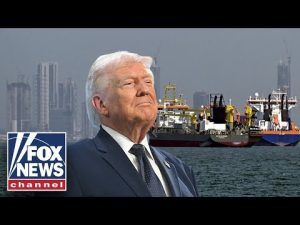
In the latest international chess match, the stage is set in Washington D.C., where President Trump is currently meeting with NATO Secretary General Mark Ruta. The backdrop to this high-stakes rendezvous is a temporary ceasefire with Iran, clinched in return for reopening the all-important Strait of Hormuz. The meeting is not just a run-of-the-mill diplomatic handshake but a crucial moment for NATO. President Trump has, unsurprisingly, thrown a few curveballs by questioning the very relevance and benefit of this aging alliance for the United States, especially when traditional allies, like Spain and France, play hard to get with flyover rights. Anyone paying attention knows that if something newsworthy emerges, the information will flow to the public smoothly and efficiently—like traffic in the Strait of Hormuz should.
Speaking of the Strait, it is the center of two monumental questions today. First off, will this ceasefire actually hold? The ink is hardly dry, and Iranian state media is already having a field day, claiming that the Iranian regime has shut down the Strait in response to Israeli activities in Lebanon. The White House is quick to debunk this claim, maintaining that the Strait is as open as ever, despite misleading reports from Tehran. The stakes are high, and the President has made it abundantly clear that reopening this crucial gateway for global oil trade is non-negotiable.
In his trademark style, President Trump has nimbly sidestepped blame for any of Israel’s actions in Lebanon, noting that the issue with Hezbollah is an entirely different ball game. However, Iran is playing a complicated round of three-dimensional chess, accusing the United States of violating various points concerning Lebanon, drone activity, and enrichment rights. All this drama poses one burning question: Is Iran treating international diplomacy like a running gag?
To bolster this ceasefire, the Trump administration has deployed its heavy-hitters, including Vice President Vance, who amusingly reports that his key contribution was making and receiving lots of phone calls. Talks must be truly riveting at these upper echelons of power. Still, he asserts that President Trump has negotiated a solid deal for America. However, the ball, as it often does, remains in Iran’s court. The President’s aforementioned “options” hanging in balance, ready to pivot back to more aggressive tactics if Iran continues to play its games.
Now, beyond the geopolitical theatrics, there’s a societal conundrum on the table—will President Trump’s efforts ever gain traction with those afflicted with what can only be comically termed as Trump Derangement Syndrome (TDS)? It seems not, despite the administration’s notable, albeit controversial, navigation through these complex international waters. With varying successes and snubs from international partners, there remain places where even victory might not seem sweet enough to please every skeptic. But all things considered, one can only sit back, chuckle, and keep an eye on how these events continue to unfold.