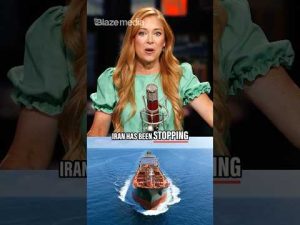
The geopolitical chessboard of the Strait of Hormuz seems to be heating up again, doesn’t it? With two oil tankers recently making their way through the Strait, one could almost hear the faint sound of the Iranian regime’s attempts at flexing their maritime muscles. However, let’s not be hasty in handing out awards for maritime strategy of the year just yet. This maneuver may very well go down in the annals of history as the last waltz for Iran’s dwindling control of this vital waterway.
Iran’s current leverage lies squarely between the realm of politics and economics, as they attempt to assert control over this significant oil transit route. However, much like an outdated flip phone in the age of smartphones, its value is on the decline. The broader Middle Eastern community is already hard at work crafting alternatives to this traditional choke point. With all the regional power players coming together to outmaneuver Tehran’s age-old stratagems, it seems like the Strait of Hormuz may soon lose its unnecessarily dramatic allure.
Let’s not forget the hefty queue outside this famed maritime passage. According to reports from the number-crunching folks at Fox Business, there are 187 tankers laden with 172 million barrels of oil waiting to get a green light. If it sounds like rush hour traffic, that’s because it is, albeit in a rather soggy format. Hopefully, with strategies like Saudi Arabia’s Pump Across the Peninsula initiative or pipelining it through Oman, the line may clear up soon enough.
On the topic of regional strategic pivots, Oman emerges as a potentially pivotal player. Tired of being grouped with Iran like an afterthought in regional custody battles for the Strait of Hormuz, Oman might be eyeing new alliances. Picture this: Oman, the UAE, Saudi Arabia, Qatar, and other Gulf nations teaming up to say “sayonara” to Iran’s maritime menace. This could usher in a new era of Middle Eastern collaboration, much to Iran’s dismay.
And don’t think the broader international community is just standing idly by. President Trump’s earlier critique of NATO’s lackluster involvement in the Iranian context speaks volumes about his expectations. The old-guard of Europe—France, Spain, and yes, even the UK—hasn’t exactly been winning any camaraderie awards lately. Meanwhile, nations from “New Europe” aren’t just watching from the sidelines. They’re stepping up to the plate and calling out their western counterparts. This isn’t just a sideline skirmish anymore; it’s a full-blown geopolitical showdown. So, if Tehran thinks it still holds a winning hand in the Strait of Hormuz, it’s time it re-evaluated its cards.