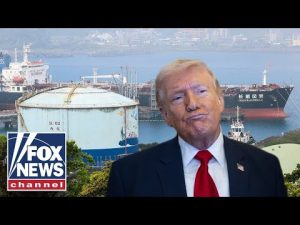
In a bold move, the President announced plans to establish a blockade in the Strait of Hormuz, a crucial international waterway. The decision, shared on his social media platform, hints at a military strategy to prevent any ships from entering or leaving this vital maritime corridor. It seems like quite the ambitious endeavor, especially given that the Strait of Hormuz is a key route for global oil shipments. The President’s idea is to have an “all in and all out” policy where ships would enter and exit at designated times, with no exceptions for friendly nations. This appears to be a grand plan to tackle the complex geopolitical dance taking place in the region.
The objective behind this blockade is clear: to halt Iran’s oil trade, which the President claims benefits only those countries Iran favors. By placing such a comprehensive blockade, the U.S. aims to exert maximum pressure on Iran, possibly leading to broader international support. It’s almost as if the U.S. is setting up a dramatic high-stakes poker game, but with ships instead of cards, and much larger implications for the planet at stake. The President’s confidence in the support of numerous countries suggests a united front against Iran, but the logistics of managing such an operation remain mind-boggling.
Comparisons could be drawn to the U.S.’s approach toward Venezuela, a strategy that aimed to limit their oil trade too. But unlike Venezuela, the potential repercussions of interfering with the Strait of Hormuz could ripple across the global economy. The strait is a gateway to nearly a fifth of the world’s oil supply, so the maneuver certainly raises questions about its global impact. One can’t help but wonder, are the planners envisioning an international race of ships, lining them up only to send them off racing through the strait? Imagine the ensuing traffic jam on the ocean highway; it’s logistically challenging, to say the least.
In addition to the logistics, there’s the question of international standing. The President mentioned expecting help from various countries. While it’s nice to think of a coalition of the willing eager to join in this maritime venture, history suggests that nations might approach with caution. A potential blockade involves not just strategic planning, but navigates the tricky waters of international law and diplomacy. Nations around the world might weigh their own interests versus standing alongside the U.S. in such a high-risk strategy.
Ultimately, this blockade plan seems poised to create waves—both literally and figuratively—in international relations and global markets. It’s a bold strategy that could redefine alliances and reshape the balances of power. Onlookers across the globe are left wondering if this will yield results similar to the Venezuelan playbook or if it’s a broader gambit. While we await the unfolding drama, one thing is certain: watching this unfold is likely to be more riveting than any maritime reality TV show.