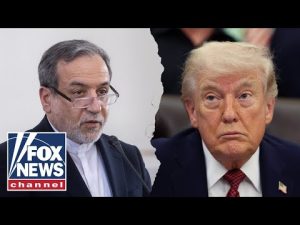
As President Trump prepares to meet with his national security team, a clear message seems to be resounding through Washington: the United States is determined not to let Iran obtain a nuclear weapon. The situation room, where the meeting is set to happen, is undoubtedly the right place for such significant discussions. Meanwhile, Iran is trying to slide out of a sticky situation by offering to reopen the Strait of Hormuz, dodging the nuclear issue like someone ducking responsibility for a broken window.
As if on cue from a tense thriller, the U.S. blockade on Iranian ports persists into its third week. The Persian Gulf remains a hotspot for geopolitical drama, and Iran’s latest concession to let go of the Strait of Hormuz control is met with skepticism. It’s like trying to trade away an old baseball card and thinking it’ll fetch a new one when everyone knows what’s at stake: nuclear capabilities. The ball is squarely in Iran’s court, with the U.S. making it clear they won’t jump on a plane to bend over backwards; there’s no need for a red-eye flight when a phone call will do.
President Trump’s cancellation of his team’s trip to Pakistan signals a strategic pause, a refusal to engage in potentially fruitless globetrotting at Iran’s suggestions. Iran’s idea of a peace deal didn’t meet the stringent requirements of the U.S., probably because they thought offering up peanuts would buy them a gourmet meal. They seem to forget that pretending to negotiate only gets you so far when you’re the one sidelining the main issue.
The Iranian Foreign Minister decried the U.S. approach, labeling American demands as excessive. But let’s be real—it’s not exactly “excessive” to want to prevent nuclear disaster. Sounds more like basic common sense than anything else. It seems Iran’s penchant for delaying the inevitable is becoming quite the predictable plot twist. Meanwhile, over in Pakistan, any hope of a sequel to negotiations has dimmed, as fortified security perimeters are lifted, signaling a retreat from talks.
There’s a feeling of an impending showdown, with President Trump making it clear that peace won’t be at the expense of U.S. security. With the administration holding firm, it seems increasingly unlikely that Iran’s wishes to take the nuclear issue off the table will ever be granted. The stakes are too high, and the U.S. administration appears ready to see things through to ensure victory. Iran can use the phone all they want, but they might find the line remains busy until they’re ready to talk about the real issue: nuclear weapons.