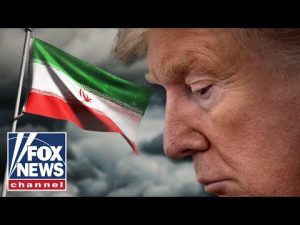
In the throes of geopolitical discourse, one might find themselves pondering the robust conversations of seasoned military personnel who have seen it all—from commanding naval fleets to tackling international crises. Enter the former commander of the USS Cole, Kirk Lipol, a man who’s walked the walk and advised the nation on matters far graver than what name Aunt Gertrude will bestow upon her next feral cat. He’s now locked in a conversation brimming with the nuances of international military strategy, centered on the ever-complex situation with Iran.
Here’s the bottom line: Iran has been behaving like someone who owes you money but bought the fanciest gadget on the market. Slow walking away from responsibility while harboring aspirations of nuclear advancement. In the thick of it all, the grand military strategy employed so far involves a mix of blunt force and economic nimbleness. Iran has been smacked with a fistful of economic sanctions following precise military actions that have rattled its command centers. If some key players in the international community have their way, Iran’s nuclear daydreams will implode faster than a Hollywood marriage.
The current blockade serves as a formidable counterpart to the United States’ previous kinetic operations aimed at thwarting Iran’s ability to flex its military muscles. With their top brass given a rude wakeup call, Iran’s leadership now resembles a patchwork quilt more than a cohesive entity. The blockade has figuratively grabbed Iran by the economic throat, leaving its oil industry teetering on the edge. Those hoping to see Iran charm its way into favor must be sorely disappointed. The message is clear: Stop with the missiles, or see your oil-soaked economy bite the dust.
Lest anyone dare question if this approach is all elbow and no brain, there are several options neatly stacked up for further actions if Iran decides to press its luck. The President, presumably basking in the glow of military guidance, will make a call for more kinetic operations if Iran continues doodling nuclear plans in the margins of its homework book. Essentially, it’s a playbook out of history: take decisive action without inappropriate escalations, while ensuring that Iran’s gangster antics in the Middle East are clipped at the wings.
In summary, the military strategy is not merely about strong-arming Iran until it comes running to the negotiation table with flowers and chocolates, but ensuring that any aspirations of nuclear grandeur are thoroughly snuffed out. Victory isn’t a pipe dream when the only path forward involves decisive blows that leave regimes with naught but an ‘I give up’ flag to wave. It’s a tougher stand, promising action that makes sure one of the world’s most notorious terror sponsors rethinks its decisions. Because sometimes, when it comes to global security, the recipe calls for heavy-duty resolve with a dash of no-nonsense diplomacy.