### Political Tensions Escalate: A Closer Look at Recent Controversies
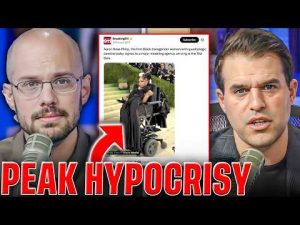
In the bustling world of politics, things can take a sharp turn faster than one can say “political correctness.” Recently, discussions arose surrounding the comments made by a well-known radio host and the notable figure known as Charlemagne the God. While different perspectives often enrich the conversation, this particular exchange took on a more pointed tone, making it clear that the stakes in political discourse have never been higher.
First, let’s establish the backdrop of the conversation. Amidst economic turbulence and a nation grappling with various political divides, Charlemagne made remarks about the psychology behind extreme political actions. His statement highlighted the importance of understanding how people could become radicalized due to their grievances, especially in light of the tumultuous political landscape created by the Trump administration. While he didn’t condone violence—the shooting incident referenced was at a political event—it was his emphasis on understanding that seemed to ruffle some feathers.
The response from Glenn Beck was as fiery as a Fourth of July fireworks show. He asserted that such talks about understanding grievances could dangerously blur the lines between political conversation and justifying violence. Beck made it clear that in a society woven with the principles of freedom and democracy, one should never reach a point where violence is seen as a reasonable option. Instead, he argued for the importance of engagement through dialogue, votes, and peaceful protests, emphasizing that America, particularly in 2026, is a place where ballots and debate should prevail over bullets.
An interesting twist in this debate is the suggestion that some public figures—like Charlemagne—have become detached from the everyday struggles that average Americans endure. Beck pointed out that wealth and privilege can create a bubble, leading to misunderstandings about the pain that many people are currently facing. While both perspectives value empathy, Beck urged for a distinction to be made between empathy for pain and the moral implications of justifying violent thoughts or actions.
The underlying tension in this discourse reveals something larger—a cultural battle over how political grievances are processed. Beck argued against allowing any amount of understanding to sneak in where it might dilute the condemnation of violence. For Beck and many of his supporters, acknowledging one’s pain does not mean giving it a free pass to lead to drastic actions. True empathy, he claimed, understands pain but firmly rejects violence as a means to an end.
As political discussions continue to evolve, these two viewpoints underscore a critical crossroads. Should society strive to understand the reasons behind radical actions and potentially bring about change, or should it maintain an unwavering stance against justification of violence in all forms? The challenge lies not just in the debates held on social media or radio shows, but in how those discussions shape the future behavior of citizens—particularly the younger generation. What is clear is that as America moves forward, these conversations will need to be approached with nuance and a steadfast commitment to preserving the principles of liberty and justice.
In a nation that prides itself on the First Amendment, it is vital to remember that free speech needs to coexist with responsible dialogue. The power of words can either bridge divides or set the stage for conflict. With such fierce discussions emerging, it’s evident that political maturity will be essential in navigating the choppy waters of modern-day American politics. Now more than ever, thoughtful conversations that prioritize understanding without compromising principles are essential in ensuring a vibrant democracy for all.