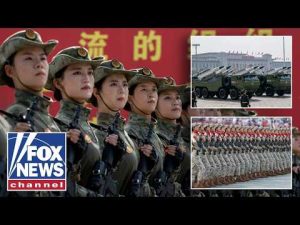
The notion of an untested military boasting the world’s largest active personnel count and more naval ships than anyone else sounds oddly reminiscent of a teenager flexing muscles in a mirror—lots of show, but little real-world experience. That’s the intriguing paradox we see with China today. Despite its impressive display of military might, Beijing has steered clear of actual conflict for over 40 years. The real question is whether this accumulation of hardware will amount to anything significant without the actual experience of a battlefield trial run.
China’s military command, firmly under the thumb of the Chinese Communist Party, operates like a tuxedo-clad boardroom meeting. A mix of military officers and political leaders, it sounds more like the setup for a nitpicking annual budget review than a combat-ready force. Veteran perspectives, like those of retired Senior Colonel Joe Bo, highlight the seismic shifts in China’s military trajectory since the late ’70s. What was once one of the most backward nations globally is, in some eyes, clawing its way up to being a borderline peer to the United States.
This surge in military investment raises the inevitable question: Is China becoming a contender to the U.S. military’s perennial heavyweight championship status? Experts suggest China’s military might still has some teething problems—at least outside its immediate neighborhood. Even though their naval ship count now eclipses America’s, the United States remains leagues ahead in terms of tonnage and technological prowess. It’s a classic case of quality over quantity, where U.S. ships compensate for fewer numbers with superior capabilities.
In the arena of the South China Sea, this imbalance is more pronounced. China is exerting its newly found numerical clout, backed by bases and greater regional presence, posing potential hurdles for any opposing forces weaving through those choppy geopolitical waters. They’ve orchestrated territorial expansions with the subtlety of a sledgehammer, transforming disputed waters into armed fortresses. From buzzing military bases to missiles standing ready, it’s a testament to how vague maritime claims can be turned into tangible, albeit contentious, realities.
Not stopping at its earthly confines, China’s ambitions stretch beyond the stratosphere. The celestial race now mingles with strategic earthbound interests, as China positions itself to potentially dominate the lonely bastion of space. With the U.S. potentially phasing out the International Space Station, China’s emerging space forte stands seemingly unchallenged in the stars above. As the U.S. wraps its astronauts in legislative red tape, China quietly woos international partners, setting the stage for a new space age theater where the audience, once captivated by American feats of engineering, might glance eastward instead.