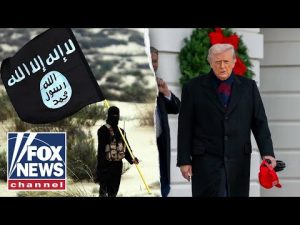
In the intriguing world of international politics, the saga involving Iran seems to be unfolding like a high-stakes chess match. The news is buzzing with comments from experts voicing varied strategies on how to manage Iran’s potentially explosive geopolitical ambitions. Cliff May, the president of the Foundation for the Defense of Democracies, adds his voice to the cacophony with a straightforward, if somewhat bold, perspective. It seems he envisions a scenario where, if Iran’s current regime doesn’t collapse due to internal or external forces, then targeting the next level of leadership might be in order. The optimism that somewhere within Iran’s echelons there might reside some “agnostics and charlatans” ready to steer the country toward more reasonable waters is both amusing and a little wishful.
The state of Iran’s economy is evidently teetering on the brink. May points to the jam-packed oil tankers, reminiscent of a poorly managed parking lot, as indicators of Iran’s fiscal strain. Theories abound whether this situation signifies the regime’s end or if they’re stubbornly dancing on the deck of a sinking ship. May’s view that cutting off revenue streams will cripple the regime is straightforward but acknowledging the tenacity of true believers whose calculations revolve more around ideology than economics is crucial. The prospect of dealing with leaders who are content with martyrdom is certainly daunting.
Let’s not forget the heavy hand Iran’s regime plays on its people and opposition groups. With past brutal crackdowns that eliminated tens of thousands, May’s call for decisive action to enable reasonable governance finds some merit. The military aspect, whether to aim for missile capabilities or something more damaging like power infrastructure, is a delicate balancing act. This involves hitting the military hard enough to disable threats while leaving the country with some semblance of economic infrastructure for a future administration. It’s sort of like trying to swat a fly without breaking the window.
The conversation about taking down Iran’s military leadership takes a sinister turn as it becomes more about finding generals than arguing over oil shipments. May suggests that perhaps the secret services need to bust out their GPS trackers and zero in on dimly lit bunkers where the decision-makers might be hiding. This cloak-and-dagger approach is a game of high risks and high stakes. It appears that the decisions left to competent military leaders could be pivotal in reshaping Iran’s future.
Enter China, with President Xi Jinping’s interest, which, according to May, aligns with keeping the Strait of Hormuz open and discouraging nukes, at least on the surface. The Chinese leader’s historically ambitious dreams of global dominance mean that a simple handshake over trade is far from binding. In his skepticism, May sees Xi’s offers of help more as placeholders for future strategic gains rather than genuine acts of international harmony. The image of Xi waiting out Trump’s presidency with the patience of a strategist knowing he needs a stronger economy before making a major move is a chess piece in its own right. However, the ever-changing dynamics of global politics mean the conclusion is far from settled.