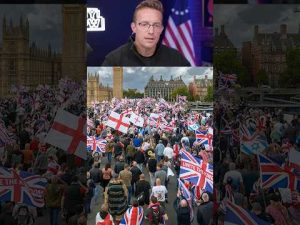
In the bustling streets of London, something monumental was happening, something so grand that even the clouds above couldn’t help but make room for it. It was the day the United Kingdom decided to speak up, loud and clear. Hundreds of thousands of British patriots took to the streets, making their voices heard. Their mission? To reclaim what they believe to be the true essence of Great Britain: an island of proud heritage and tradition. Never mind what the media reports; this march was a spectacle of unity fueled by a shared vision to make Britain great again.
The sea of people was as big as it was passionate, rolling through the streets like a mighty river. They had one message: enough is enough. They felt their once-proud nation was slipping away, overtaken by what they viewed as unchecked immigration and cultural shifts. For them, the essence of England was being washed away, replaced by something unrecognizable, something they didn’t sign up for. To these marchers, the government seemed more concerned with being politically correct than with preserving what they held dear: the fabric of English society.
In what appeared to be a massive political statement, the Conservative government faced a tough setback, losing dramatically. It was a sign of the tide turning, a crimson flag waving furiously at the powers that be. The response from those in power had been less than encouraging. In an apparent bid to control the narrative, they banned several speakers from entering the country, deeming them far-right extremists. However, this tactic seemed to backfire spectacularly, igniting even more passion in the marchers. They noticed that while some voices were silenced, seemingly more dangerous individuals were welcomed with open arms.
To the crowd, this was the epitome of hypocrisy. If certain voices are silenced while others, potentially more harmful, are allowed entry, what does that say about the government’s priorities? The marchers argued that the establishment had its wires crossed. As they saw it, the government should focus on protecting its citizens, not stifling dissent or ignoring the real issues. Their message reverberated through the streets: they were ready for change, real change. They were itching for a political bloodbath in the next elections, eager to upend the status quo.
Just as the 2016 and 2020 elections in the United States signaled a shift in public sentiment, this march in London bore the hallmarks of a similar revolution. For the marchers, reclaiming Great Britain wasn’t just a slogan; it was a mission. They were inspired by the likes of activist Tommy Robinson, who had tirelessly worked to rally the people. As the marchers returned home, one thing was certain: the winds of change were blowing, and they were ready to steer their country in a new direction.