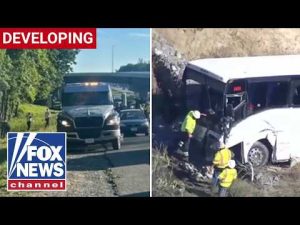
In a shocking and heart-wrenching incident on the roads of Virginia, a tragic crash claimed the lives of five people, including two young children, and injured over a dozen more. The catastrophe was caused by a bus driver from Staten Island who, according to reports, could neither speak English nor read road signs, which should make anyone question why such an individual was behind the wheel in the first place. This unfortunate event unfolded in Stafford County, where authorities believe the driver failed to properly adjust his speed for traffic, resulting in this deadly collision.
The driver in question, identified as Jing S. Dong, became a naturalized citizen of the United States but apparently didn’t acclimate enough to navigate its roads sufficiently. It’s worth noting that he obtained his commercial driver’s license in 2024 from New York—a state that might need to review and potentially stiffen its regulations and oversight when it comes to licensing drivers, especially those who will be entrusted with the safety of numerous passengers.
This tragedy has naturally drawn attention to the policies and measures (or lack thereof) surrounding road safety, especially regarding who gets to operate vehicles that hold such a responsibility and potential for mass harm. Transportation Secretary Shawn Duffy highlighted the importance of strict enforcement in ensuring every licensed driver can understand road signs and effectively communicate with law enforcement. After all, if you can’t tell a stop sign from a yield sign, there might be a slight issue there that gets magnified when lives are at stake.
Now, as the investigation continues and charges are expected to be filed against the driver, fingers are being rightfully pointed at the systems that allowed such a glaring oversight. It’s about time federal and state authorities put their foot down and ensure rigorous standards are upheld. Expert training, linguistic proficiency, and road safety skills are non-negotiables that should be universally enforced, not treated as optional decorations on the bureaucratic Christmas tree.
While the lives lost cannot be brought back, one hopes this serves as a wake-up call to those in regulatory positions. The priority should be ensuring that everyone, from trainees to trainers, takes the gravity of road safety seriously. After all, if an arcade won’t let you drive a bumper car without reaching a certain height requirement, why should the rules for getting behind a real bus be any less stringent? As always, it’s not just about enforcement—it’s about common sense, a commodity apparently lost in translation in this case.