It’s a typical day in the political thriller happening in the Middle East. President Trump is once again under the spotlight, contemplating his next move like a chess master hesitant to advance his queen just yet. Meanwhile, the Secretary of War, Pete Hegseth, has been hammering home the idea that the only deal President Trump is interested in is one that benefits the United States. It’s a bold assertion, but one that has become a hallmark of Trump’s diplomatic strategies. The administration seems fixated on ensuring that Iran isn’t going to get its hands on a nuclear weapon anytime soon, a commitment that apparently only Trump is bold enough to commit to, if Secretary Hegseth’s words are anything to go by.
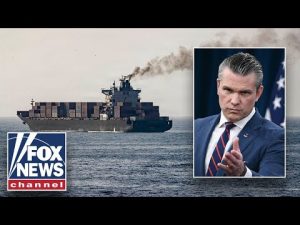
Over in sunny Dubai, foreign correspondent Jeff Paul reports back home amidst a backdrop of looming tension that would make a Hollywood thriller feel like a Sunday afternoon family movie. A little drama unfolded when a U.S. aircraft disabled a Gambia-flagged vessel that apparently couldn’t take a hint after receiving 20 warnings to stop heading toward Iran. The U.S. military decided that a Hellfire missile would be more persuasive than another naval telegram, permanently obstructing the ship’s journey through the Strait of Hormuz. It’s a delicate dance of warships and diplomacy, as everyone involved anxiously waits for President Trump’s next move.
Speaking of keeping everyone on their toes, despite speculation that the president was set to lift the blockade on the Strait of Hormuz, no such decision has been publicized. Following a closed-door meeting, the anticipation remains. Pete Hegseth, while speaking from the other side of the world in Singapore, tried to boost optimism by saying Iran was starting to budge in negotiations, suggesting the talks were at least fewer than a dozen missile strikes away from being productive. However, one Iranian official shot back, claiming that concessions don’t come from dialogue but rather from the firing of their own missiles. Apparently, they’ve taken a page from the “actions speak louder than words” playbook.
Back in Tehran, residents rallied around their Supreme Leader, dismissing President Trump’s threats about seizing their uranium like a bad dream. Many still rue the uranium deal from 2015, considering it a misstep. Today, they see uranium as both spiritually and materially precious—akin to the proverbial national heirloom that you certainly don’t want to give up easily, especially to someone who is 8,000 miles away with no practical claim to it.
Meanwhile, reports emerged of American casualties due to a Kuwaiti air base missile strike. This incident was linked back to Iran, with U.S. Central Command labeling it an outrageous ceasefire violation. It seems President Trump’s strategic game of chicken with Iran continues as everyone awaits his next big decision, a bit like waiting for a cliffhanger in a favorite TV series. The stakes are significant, but the theatrics are undeniably entertaining.