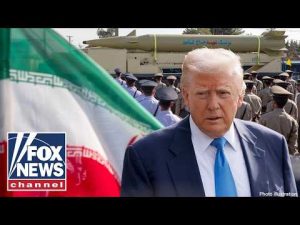
It’s quite the spectacle in the realm of international diplomacy when President Trump finds himself in the whirlwind of Iranian nuclear negotiations. The president has been unequivocal about Iran’s need to ensure transparency and honesty in their nuclear ambitions. However, with Iran’s history of being as consistently transparent as a foggy morning in London, it’s a wonder anyone takes their commitments at face value. The latest buzz is the International Atomic Energy Agency (IAEA) plans to send inspectors to Iran’s nuclear sites, which some might optimistically call a major milestone in the ongoing talks between the U.S. and Iran.
One might imagine there’s a comedy of errors playing out, with Iran saying all the right things publicly while secretly doing the diplomatic equivalent of crossing their fingers behind their backs. President Trump seems pretty confident about the situation, though. When pressed about Iran’s denials, he made it clear that if Iran truly had nothing to hide, they wouldn’t be sweating bullets. Of course, he reassures everyone that inspectors will be on-site—eventually—at a time appropriately defined by whatever calendar it is he’s using.
In the sea of diplomatic tête-à-têtes, also floating on the turbulent waters of the Persian Gulf are millions of barrels of crude oil gliding through the Strait of Hormuz. Supposedly, there’s progress on maintaining a ceasefire allowing this passage, though one might be forgiven for thinking Iran’s real love affair is with setting up tolling and insurance systems rather than peace agreements. All of these maneuvers suggest a peculiar kind of financial innovation, or perhaps it’s Iran’s deft way of saying, “You can pass through, but it’s going to cost you.”
Meanwhile, Secretary of State Marco Rubio is on the scene in the Middle East, presumably trying to navigate this geopolitical minefield with more finesse than a bull in a china shop. He’s delivered a statement on Iran with the charm and subtlety of a seasoned diplomat—or at least one might hope. Rubio suggests that Iran could choose to become like a steady nation instead of clinging to its identity as a revolutionary state dabbling in terrorist exports. Of course, there’s a hint of skepticism about whether they’ll heed such wise counsel.
On another geopolitical front, Israel and Lebanon have been hashing things out, with direct talks aimed at normalizing relations and tackling the armed presence of Hezbollah. It’s heartwarming to imagine these two neighbors exchanging camaraderie after a long history of disputes, but we’ll see how many bridges are built—or burned—in the process. So, the Middle East continues to be a carousel of negotiations, with promises and deals swirling as if in unending orbit. Let’s hope some productive results emerge from these discussions, but if history is any indicator, it might be prudent to keep expectations grounded.