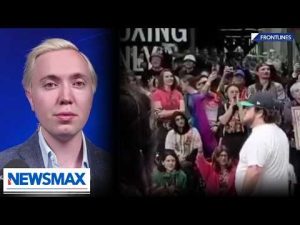
In the bustling heart of New York City, a group of Democratic Socialists recently gathered to rally under the premise of heralding new ideas and expanding their influence. Their chants, echoing through the normally bustling streets lined with yellow cabs and skyscrapers, may have sounded like a throwback to a bygone communist era. Yet, for those involved, it marked a significant step toward reshaping the political landscape of the city. These newfound members, apparently entering the Democratic Party’s “big tent,” raised a few eyebrows—and not just among casual observers.
The Democratic Socialists’ rally seemed to shine a spotlight on an internal struggle within the Democratic Party. Now, party leaders like Hakeem Jeffries find themselves trying to welcome these radicals without completely overturning the tent they’re supposed to be expanding. It’s a classic case of wanting to appear inclusive while simultaneously trying to maintain control. Hakeem’s optimism about embracing new ideas is admirable, but when those ideas tread dangerously close to the fringes, one has to question: at what cost do these welcome mats come?
One of the main concerns revolves around a particular candidate, Kiros, who has managed to stir the pot considerably. Kiros’s candidacy seems to be supported by views that could generously be called controversial. Her belief that the 9/11 attacks were a consequence of U.S. foreign policy isn’t exactly the uplifting rhetoric that many would expect from someone vying for public office. Back in the day, suggesting that America, in any way, deserved such tragedies would have been political suicide. Fast forward to today, it’s a shocking reality that someone holding such an opinion could find themselves with a legitimate platform.
The Democratic Socialists, often dubbed the new wave within the party, bring an extremely narrow focus that the more seasoned Democrats may not have anticipated. The root of many disagreements seems to stem from their stance on Israel and their apparent airs of anti-Semitism. As much as the senior Democrats like Chuck Schumer and Hakeem Jeffries wish to expand their tent, it becomes increasingly problematic when that tent’s poles appear to be held up by divisive and intolerant stances.
It’s a curious time in politics when slogans of inclusivity result in an open invitation to join forces with those who appear to harbor disdain for the very foundations of the nation. The situation is akin to opening your doors to everyone without a second thought to their intentions. While expanding the party may sound like a logical strategy to rally more votes, embracing those who openly criticize the country only weakens the fortifications of the tent from within. It’s an old tree allowing termites to make themselves at home, only to find it can’t withstand the winds of political change.