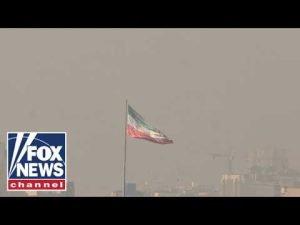
In a time when the world should be moving toward peace and cooperation, it’s disheartening—though not entirely surprising—to see continued tensions between the United States and Iran. Recently, a tragic missile attack in Jordan claimed the lives of three U.S. service members. The attack, seemingly unprovoked, has compelled the United States to retaliate for nine consecutive nights, targeting various Iranian military installations. The situation has escalated, prompting President Trump to assert that Iran has suffered significant military losses. However, in true Iranian fashion, their officials remain obstinate, showing little interest in yielding despite the mounting pressure.
As the conflict tightens its grip, U.S. strikes have been aimed at dismantling multiple aspects of Iran’s military power, from command centers to missile launch sites. This vigorous response underscores the U.S. commitment to safeguarding its interests and ensuring the threat Iran poses does not go unchecked. However, this ongoing drama hints at the potential for escalation, with the U.S. contemplating attacks on more critical infrastructures like power plants and bridges if Iran doesn’t come to the negotiation table willingly. President Trump’s approach seems clear: demonstrate strength first and offer diplomacy second.
Iran, however, seems trapped in a cycle of defiance, with its officials publicly refusing to be swayed by what they term as bribes. In their eyes, nuclear enrichment is a non-negotiable matter, a hard-earned achievement despite the sanctions and hardships endured. This stance is bold, yet recklessly overlooks the damaged relations and the increasingly strained international dynamics. Their apparent willingness to suspend negotiations after a mere twelve days in a complex diplomatic dance is indicative of their rigid position. It sets the stage for further conflict unless a resolution is magically found.
Meanwhile, the backdrop of all these theatrics includes regional players who are likely praying for a return to peaceful negotiations. The Secretary of State, Marco Rubio, has indicated that diplomacy remains a possibility, though one can’t help but wonder if “real” diplomacy is even achievable under such circumstances. After all, actions speak louder than words, and the recent attacks on ships indicate that Iran’s behavior might not be ready for a new chapter of diplomacy. Indeed, for diplomacy to work, both sides must first be willing to adhere to a set of agreements—a task that appears monumental as of now.
Adding another layer of tension, the state of Israel is on high alert, ever wary of any spillover effects from this entrenched conflict. With debris from Iranian missiles targeting the southern Jordanian city of Akaba, Israel’s defense systems have successfully engaged in intercepting threats. These troubled times present uncertain days ahead for the region. For some, it’s a waiting game to see if cooler heads will prevail. For others, it might be yet another chapter in the ongoing saga of Middle Eastern geopolitics—a game seemingly played without an end.