The tangled web of Middle East diplomacy has taken center stage as the United States, together with Oman, works to coax open the Strait of Hormuz. The region, known for its volatile relations and murky politics, seems to be on the brink of a breakthrough—or yet another breakdown. The commander-in-chief apparently would rather deal in handshakes than in air strikes, a preference some might find disturbingly naïve given the history of the Iranian regime.
Gulf allies have weighed in, reminding the president of the intricate dance of diplomacy, while offering a suggestive nudge towards negotiation over aggression. But let’s face it, trusting Iran’s more slippery than ice on a hot summer day. Digging through details with them sounds like the plot of a frustratingly long movie featuring plot twists aplenty, a drama nobody signed up for. Yet here the world stands, watching anxiously to see if traffic through the Strait of Hormuz will resume, or if it’s back to the drawing board with a fistful of sanctions.
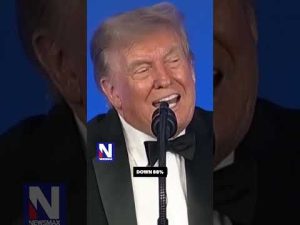
The president, from his podium in Las Vegas, waxed poetic on his options. Wouldn’t it be nice if diplomacy flowed as easily as campaign promises during an election year? Some of his statements, like claiming colossal caches of munitions, resonate with echoes of optimism—and perhaps a pinch of bravado. But the reality at the ground level is a little more complicated, with reports indicating a shortage of essential defense tools while tabulating nearby allies as pieces in an elaborate game of geopolitical chess.
Meanwhile, Israel remains a stoic participant, asserting its state’s non-negotiable status—agreement or no agreement. Even as their soldiers face grim realities, dealing with explosive devices planted by hostile neighbors, Israeli leaders voice a repeat message of allegiance with the U.S., whose primary role has swiveled towards arms supplier rather than peace negotiator.
A savvy observer in Washington calls out the farcical nature of Iran’s internal politics. Who runs this show, anyway? When meeting rooms are draped in secrecy and officials trade formality for mystery, it seems like the sort of clandestine get-together fit for a spy novel, not legitimate statecraft. For any diplomatic deal to merit consideration, America must discern the real players calling the shots in the Iranian hierarchy—not the puppets prancing for global cameras.
In the end, the questions loom larger than the apparent solutions. The United States might find herself once again beefing up military presence rather than boxing up peace accords. With potentially precarious outcomes hanging in the balance, one wouldn’t be blamed for considering a deal with Iran as an expedition through an unsettling labyrinth where even the guides have hidden agendas. One sighs at yet another prolonged chapter in the region’s perpetually uneasy tale.