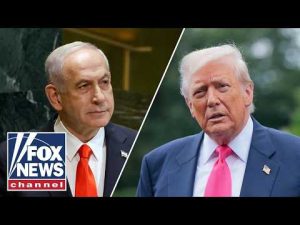
As the clock strikes midnight on the 60-day ceasefire agreement with Iran, tensions in the Middle East are bubbling over like a pot of overcooked stew. The president, never one to mince words, has threatened to unleash a barrage of U.S. military might on Oman if they dare obstruct America’s endeavor to reopen the strategically crucial Strait of Hormuz. There’s even talk about a white flag of surrender, as if Iran is about to fold like a cheap suit.
While Democrats are busy doing what they do best—criticizing from the sidelines—the administration is doubling down on its unwavering stance: Iran must never get its hands on a nuclear weapon. According to the president, these hard-line assertions aren’t just some flippant remarks—they’re the pillars of U.S. policy. Yet, back in Washington, critics claim that the administration’s strategy resembles a mystery novel with missing pages—they’re not entirely sure what the plan was, is, or will be.
Amongst this political melee, intelligence reports suggest that Iran’s leader is cozying up his military to increase costs for U.S. involvement in the region. It’s almost as though Iran is saying, “We can be as irrational as we want,” while the common people bear the brunt of sanctions and turmoil. How’s that for leadership? Meanwhile, the president plays his own game, managing international relations with the finesse of a seasoned poker player, albeit one who’s liberal with the bluffs.
In this veritable mess, one can only imagine the average American’s frustration at climbing gas prices, juxtaposed with the potential victory of curtailing Iran’s nuclear ambitions. Never mind the fact that these complex issues go over like lead balloons with voters primarily concerned about their wallets. Today’s economic climate has people feeling less than thrilled about the idea of paying more at the pump because of a geopolitical chess game half a world away.
As the president wrestles with this international conundrum, those on both sides of the aisle can probably agree on one thing: The situation is complicated, and the end is far from in sight. Even as military strength and economic sanctions tighten the noose on Iran’s regime, the landscape in the Middle East resembles a scene of organized chaos. Whether creative diplomacy or sheer force wins out, the clock is ticking, and the world waits with bated breath to see how this high-stakes game will end.