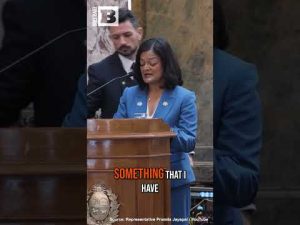
In the ever-entertaining circus of American politics, the spotlight these days seems to be on the radical transformation—even some would call it outright hijacking—of the Democratic Party by socialist forces. Surprisingly, characters like Angie Nixon are climbing the political ladder, and one can’t help but wonder if this ascent is fueled more by a lack of opposition than genuine support. It’s an intriguing hypothesis that in places like Florida, many of the Hispanic Democrats have turned Republican. With fewer Cuban voters left to bat away the socialist agenda, candidates like Nixon find themselves unopposed in their primary quests.
Nixon’s peculiar proposal for a national wealth registry is yet another layer to the ever-expanding cake of governmental overreach that socialists seem intent on baking. The prospect of documenting the value of one’s car or even couch for the IRS is a chilling peek into their vision of America. It’s an idea steeped in irony, a world where citizens would own nothing distinct and apparently be quite thrilled about it. It’s a comforting thought, akin to being told you get to keep your delicious pie, but only if it’s pureed and portioned into equally shareable slices.
This tidal wave of ideology, once secluded to the rarefied air of Ivy League anthropology departments, now threatens to crash into mainstream American politics. Socialists, apparently, are exceptionally organized and funded, and they’re strategically targeting key races to tip the balance of power. The strategy is simple yet effective: concentrate a small, devoted group of activists, infuse them into campaigns needing a boost, and voilà, the socialist agenda gets a fresh spring in its step. It’s a page right out of the political playbook, meticulously applied in places like Colorado and New York City.
Meanwhile, the perplexing refusal of socialist leaders to denounce Cuba tells its own story. Denouncing the Cuban regime might seem an easy win to broaden appeal, but silence speaks volumes. It reeks of underlying allegiance or perhaps, dependency. Like a scene from a political thriller, claims surface about Cuban support and funding for the socialist wing, their quiet whispers allegedly guiding them to an end goal that feels far removed from liberty and democracy. It’s like watching a suspense movie where the villains are always a step ahead, almost daring the audience to question reality.
The challenge at hand, then, seems to be more profound than just policy disagreements. It’s a battle of philosophies, where the dangers aren’t just rhetorical but strategic. In a world where exits to Cuba are merely theoretical, the threat of these ideologies taking root is a conversation—let’s call it a wake-up call—worth having. As the curtain closes on this act of the political saga, one must remain vigilant, ready to act, before the next act might strike much closer to home than anyone anticipates.