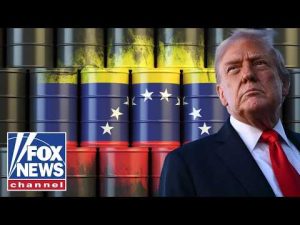
In a move that reverberates across both continents and political aisles, President Trump has negotiated a landmark deal involving Venezuela’s vast oil reserves. With the stroke of a pen, the United States now holds majority control over a staggering 65 billion barrels of oil, nestled beneath the Venezuelan landscape. If one were to set aside any skepticism for just a moment, they’d realize this deal pours sweet, light, crude victory straight into America’s gas tanks, potentially lowering gas prices that have skyrocketed in recent months.
This agreement, ushered in with accolades by figures such as Secretary of War Pete Hegseth and Secretary of State Marco Rubio, is touted as a defining moment for American energy independence. And let’s be real—what red-blooded American doesn’t want a little less dependence on foreign oil, especially when that oil previously dangled under the thumb of a socialist regime? While political rivals will harp about imperialism, the economic boon stands to bolster both nations, promising a windfall in revenues for Venezuela and incremental relief for American consumers.
Not everyone shares the enthusiasm, however. Predictably, detractors offer up their usual dirge, criticizing the deal as a brazen overstep by the U.S., labeling it as another chapter in the age-old saga of imperialism. Nevertheless, these naysayers conveniently overlook the transformational potential of this arrangement. With newly stabilized political landscapes, both nations can anticipate significant economic advancements. Meanwhile, safely from their echo chambers, critics clutch their pearls while failing to acknowledge the diplomatic finesse executed to achieve such a triumph in international relations.
As Venezuela’s interim leadership applauds the diplomatic dexterity shown by American negotiators, there emerges a curious twist—the former socialist bastion now finds itself in cahoots with the very embodiment of capitalism. If this isn’t a cautionary tale about the pitfalls of socialism, it’s hard to imagine what is. The world watches Venezuela as it edges toward democratic revival, perhaps recognizing that doubling down on socialism might not have been the winning strategy after all. It’s a colossal win for capitalism, as American values of free enterprise make landfall in the Andes.
In sum, while the echoes of dissent reverberate through the halls of those who would oppose this deal, the practical benefits are palpable. The deal reaffirms energy security and strikes a significant blow to the dependence on unfriendly foreign oil. As the ink dries on this agreement, Americans can relish the prospect of a future where gas prices won’t cause rapid spikes in heart rates during routine trips to the pump. Indeed, the real question might be: What took us so long to make such a savvy, albeit bold, move?