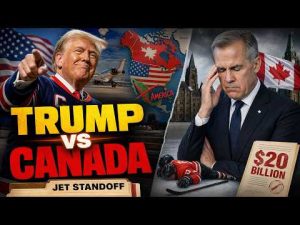
**Trade Tensions Heat Up: Canada and the U.S. Gear Up for a Bumpy Ride**
In what can only be described as a game of high-stakes trade poker, Canada and the United States are at it again. Recently, the stakes became a little higher as President Trump took a bold step by announcing a ban on the sales of Bombardier jets in the U.S. unless they start making their jets right here at home. This came on the heels of a lengthy battle involving tariffs, trade threats, and a mix of business maneuvering that would make even the toughest negotiators sweat.
The tussle all began over a nine-year struggle faced by Gulfstream, an American jet manufacturer, which tried unsuccessfully to gain certification in Canada. Bombardier, a competitor, effectively put up a wall around its market. Trapped in a bureaucratic limbo and shelling out over $60 million in legal fees, Gulfstream couldn’t catch a break. Then, enter President Trump, who made it clear that enough was enough. With a swift stroke of his pen, he hit back with big tariffs on Bombardier, and suddenly—just like magic—Gulfstream’s certification woes vanished. Talk about a comeback! The Canadians got the message loud and clear when they certified Gulfstream in just two hours.
But the tension didn’t stop there. Canada promptly retaliated with $20 billion in tariffs on American goods, including the ever-popular steel, aluminum, and even those adorable paper towels we all rely on. This heavy-handed response was met with a hearty dose of skepticism from financial experts who argued that these tariffs could ultimately hurt Canadian consumers more than anyone. Meanwhile, American Treasury Secretary Scott Bent shared his thoughts on the potential inflationary impact of these tariffs, hinting at a far from dire situation for U.S. consumers.
Adding fuel to the fire, Sapporo, a Japanese brewery, recently announced it was shifting its beer production from Canada to the United States. Talk about taking sides! It seems that companies are voting with their wallets and choosing to invest stateside due to increasing trade uncertainties. The move raises eyebrows and questions about how Canada’s tariffs will affect American businesses and consumers alike.
The airwaves were buzzing with reaction to these developments, with former Quebec Premier Jean Charest making an appearance on a prominent American news network. He expressed concern that while the U.S. might think it’s winning at this game, it risks hurting its own workers with the relentless pursuit of tariffs. His words highlight the complex interdependence of the two economies, revealing that many American jobs rely on the success of Canadian companies too.
In this intricate dance of trade relations, President Trump remains unapologetically straightforward, asserting that Canada seems to want the perks of being treated like a U.S. state without any of the responsibilities. As he continues to push for reforms and negotiations that benefit American jobs, his message to Canada is clear: play fair or face the consequences. Amidst all the seriousness, there is a hint of humor in how Trump has even jokingly suggested renaming New Mexico as “New America.” That’s a reminder that in politics, a bit of jest can often mask serious underlying agreements or disagreements.
As the dust settles on this latest round of tariffs and trade drama, one thing is for sure: this is a saga that promises to unfold in surprising ways. Will Canada bend its economic strategies under pressure, or will there be more tough negotiations ahead? Only time will tell, but one can grab the popcorn and settle in—it looks like this trade fight is far from over.