In the world of politics and public opinion, where the lines between reality and speculation often blur, we find many tales that tickle the imagination of those paying attention. One recent topic swirling in the whirlwind of political discourse revolves around none other than the former President Barack Obama. Yes, the man who became a household name across the globe, once affectionately called Barry Soetoro, is back under the political spotlight. It’s all because of resurfacing talk about his connections to his Muslim faith and African heritage. The conservative chatter is exuberant, as figures from different corners of politics discuss Obama’s early years and unique background.
Some folks out there find it intriguing that when Barack Obama was an 18-year-old, he had aliases and backgrounds that seemed, well, colorful. Some even draw comparisons to Donald Trump, who has frequently been the subject of his own peculiar narratives. On the ever-spinning media carousel, the press, which is often accused of having more spins than a carnival ride, does little to peel back these mysteries. Instead, there seems to be a trend of reporters smoothing over these stories, with never truly clarifying inquiries about Obama’s youthful days.
On top of that, the Obama legacy is a topic that refuses to abide by the hands of time. With his statements emphasizing the influence of Muslim Americans throughout history, more than a few eyebrows have been raised. Conversations have even turned to early American history, with some arguing the audacity of historical claims about Muslim influence. They suggest the roots of tension, which harken back to the early days of the Republic, challenge Obama’s narratives that have drawn significant attention from political analysts and everyday folks alike.
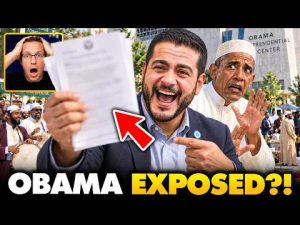
Fast forward to the present day, and Obama’s presence in the political and cultural landscape continues to be felt. There’s talk of his enduring influence on politicians like Abdul El-Sayed, who identify with Obama’s heritage and view it as a springboard for their political ambitions. Even in the realm of architecture and societal symbols, we witness the former president maintaining a footprint—a Muslim wedding hosted at the Obama Presidential Library stands as a testament to the continued interlace of his legacy with contemporary America.
As is the case with all captivating narratives, people await clarity and truth. Many in the conservative sphere hope this ongoing dialogue will unravel more about Barack Obama’s mysterious past and influence. They expect this investigation and conversation will shine a light on underlying truths, enabling a full understanding of how such personalities shape our current political stage. Whether through open discourse, humor, or biting critique, the quest for answers persists, fueled by curiosity and, perhaps, a dash of hope for transparency in the labyrinthine world of politics.