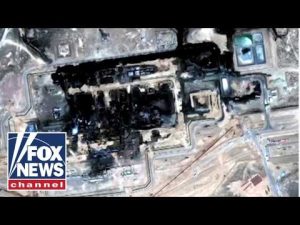
In a startling development that underscores the volatility of global politics and its impact on everyday commodities, an Iranian drone attack on a crucial Saudi pipeline has left the oil markets reeling. This attack has put a significant dent in oil supplies, leading to soaring prices. Of course, this couldn’t come at a more inopportune time, as the United States focuses considerable energy on fostering relations with Venezuela at the G20 energy conference. It’s a high-stakes game of diplomatic chess, with everyone vying to protect their king – oil.
The situation has exposed some critical vulnerabilities in global energy supplies. Saudi Arabia, not exactly known for its subtlety, faces the daunting task of finding a workaround after its lifeline pipeline suffered damage. Their initial plan of using this pipeline as a backup during tensions in the Strait of Hormuz is up in the air. It seems Saudi Arabia must now rely on a patchwork of solutions, including pushing more tankers through the Strait and fast-tracking repairs. But with only thirty ships managing to traverse the Strait instead of the usual hundred, that’s like trying to move a mountain with a teaspoon.
At the G20, the U.S. has extended an olive branch to Venezuela, a country not typically part of these high-level discussions. There’s hope that some strategic agreements regarding oil, gas, and even banking can emerge from these talks. However, anyone expecting a quick fix here might as well be waiting for pigs to fly. Fixing the mess created over the last couple of decades, especially with the constant push toward green energy policies, will not be a walk in the park.
Speaking of green energy policies, they almost deserve their own comedy special. The notion that shutting down refineries and retooling facilities could somehow lead to a sustainable energy future is now being put to the test. Who would have thought that, by sidelining fossil fuels prematurely, the world would end up being held hostage by countries like Iran? This scenario should have been as predictable as a rainy day in Seattle, yet it seems the foresight was lacking and the blinders were firmly in place.
The drama doesn’t end there. Across the globe in China, there’s a ripple effect. The Chinese, who undoubtedly have their own interests to juggle, are finding themselves in an awkward dance. Their reduced oil demand is a strategy that’s about as sustainable as a chocolate teapot under the current global pressures. The upcoming U.S.-China talks are expected to focus on improving trade relations, possibly striking deals on grains and meats alongside energy. Ultimately, however, these diplomatic engagements are merely putting band-aids on a situation that requires more substantial intervention.
As the U.S. weighs its options, the question of how much military support to extend to Saudi Arabia looms large. Many believe pushing back against hostile forces in the region would not only stabilize oil prices but also assert a semblance of control over a chaotic situation. One can only hope that cooler heads prevail and that solutions are found amidst the clamor of political posturing. Meanwhile, consumers can prepare for a rocky ride, courtesy of international squabbles and past misguided energy adventures.