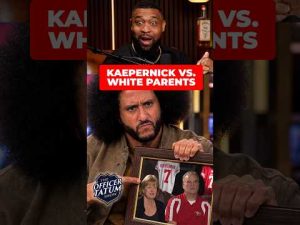
Colin Kaepernick has recently stirred up conversation once again, but this time, it involves a look into his upbringing and the complexities of race. Raised by white parents in California, Kaepernick’s experience is a point of contention that many find difficult to navigate. His story exemplifies a broader issue within modern American society: the challenge of understanding racial identity in families that adopt children of different ethnic backgrounds.
Kaepernick paints a picture of a life filled with tension between his identity and the culture around him. His parents may have provided love and stability, but they were evidently uncomfortable discussing race. This discomfort highlights a critical flaw in progressive ideology that means well but often misses the mark. Ignoring conversations about race doesn’t help children thrive; it can create a divide that’s hard to bridge later in life. The idea that one can simply embrace “colorblindness” in a multiracial family is a romantic notion that often backfires.
Listeners might ask what the ideal approach should be for white families adopting black children. According to Kaepernick, it involves understanding and connecting with the child’s racial identity. He suggests seeking mentors who share similar cultural experiences, emphasizing the importance of representation. This viewpoint raises a broader question: why should a child have to navigate such complexities alone? It’s the responsibility of parents, regardless of their racial backgrounds, to engage with these realities fully.
The progressive narrative often pushes the idea that racial identity must always be celebrated in specific and sometimes limited ways. Yet individuals like Kaepernick demonstrate that biracial and multicultural identities are far more nuanced than simply identifying with one race over another. His insistence that he must “hold his blackness close” reveals a contradiction in progressive views that often oversimplify identity. While racial identity is undeniable, it should not solely define a person. The character and values one holds matter more significantly than the color of their skin.
Moreover, it is crucial to recognize the importance of role models in shaping identity. Kaepernick gravitates toward cultural icons, some of whom may not align with strong role models, leading to discussions about better examples from history, athletics, or politics. The suggestion that individuals can be both black and embrace a diverse set of influences seems not just reasonable but vital in encouraging young people to form their own identities. Highlighting successful figures of all backgrounds underscores that greatness knows no racial bounds.
In summary, Kaepernick’s recent reflections on race and personal identity offer a window into the realities that many adopted children face. However, the conversation should push beyond personal anecdotes to encompass broader messages of responsibility, diversity, and the need for genuine discussions about race in all families. By addressing these complexities head-on, individuals can foster a richer understanding of identity that transcends the limitations often imposed by race. Without embracing this holistic view, society runs the risk of narrowing the scope of who individuals can become in their pursuit of personal excellence.