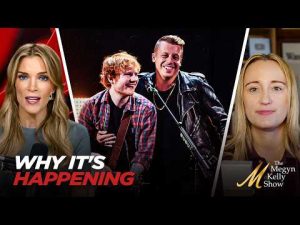
In an age where concerts are meant to be a celebration of music and unity, they are increasingly becoming platforms for political discourse—a trend that not all audiences are eager to embrace. The recent controversy involving Ed Sheeran and his tour’s former opening act, Macklemore, at a performance in New Jersey is a case in point. Macklemore’s unexpected political pronouncements at the concert sparked significant backlash. This incident highlights a broader debate about the appropriate venues and contexts for political expression.
In what should have been an evening devoted to melodies and rhythms, Macklemore’s audience was instead exposed to a political lecture. While Macklemore has every right to his opinions, one could argue that a commercial concert setting might not be the best place for such declarations, especially when fans are there primarily for entertainment. Concertgoers have paid good money to hear their favorite hits, not to be drawn into global political conflicts that are complex and divisive by nature.
The decision by tour promoters to alter the remaining shows seems to stem from a pragmatic understanding of their audience’s expectations. Concerts are a form of escapism, a temporary respite from the world’s troubles. Introducing heavy political content, especially on contentious topics, can disrupt that atmosphere and provoke strong reactions from attendees who may not share the same viewpoint.
Furthermore, this episode spotlights the double standards that often come to play concerning free speech and censorship. While Macklemore’s statements at the concert are protected as free speech, the response from venue owners to dissociate from his message is similarly a form of expression. Business owners and promoters have the right to consider the impact of political messaging on their bottom line and consumer satisfaction. Critics may see this as censorship, but in reality, it’s about maintaining the intended spirit of the event.
Interestingly, this incident with Macklemore has inadvertently elevated his status among supporters who see him as a figure of defiance against mainstream narratives. However, while his cause may have gained momentum in certain circles, the episode underscores a prevailing public sentiment: that entertainment and activism occupy different spheres and should occasionally intersect with care. The debates surrounding free speech and responsible expression continue to rage, reflecting the complexities of our times, but audiences will likely keep favoring venues and artists that understand and respect the primary purpose of a concert—music.
So, as the debate over mixing music with politics continues, one thing remains clear: fans are craving an escape through concert experiences that focus on the art, rather than the artist’s personal worldviews. For many, a night at a concert is about leaving behind the clamor of political discourse for a few precious hours, allowing the music itself to do all the talking.