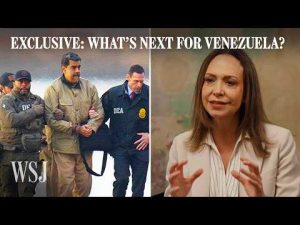
Maria Corina Machado, the tenacious opposition leader of Venezuela, has announced her return home after months of being away. This momentous decision comes after a daring escape last December to receive the prestigious Nobel Peace Prize, a trip that led to her being unable to go back to her homeland until now. Her time away was spent in Panama City, where she plotted her political comeback amidst the ongoing struggles of the Venezuelan people.
Machado, who has become a beacon of hope for many in Venezuela, made it clear that her absence has been felt deeply. While she has watched from abroad as the country grappled with economic turmoil, political oppression, and a precarious humanitarian situation, she believes her presence is crucial. The urgency for action has only intensified due to the dire state of affairs—over 85% of Venezuelans now live in poverty, and recent earthquakes have exacerbated the existing crisis. Machado sees herself as a force that can offer stability and channel the frustrations of the populace into a peaceful push for democracy.
In the months leading up to her return, Machado has been gearing up for a significant mission. The political landscape has shifted since she last set foot in Venezuela, with some political prisoners being liberated and people starting to openly demand their rights. She envisions a country ready for change and is eager to rally her fellow citizens. By organizing public debates and assemblies, Machado hopes to empower citizens to engage in the political process. She sees her mission as much bigger than her own journey; it’s about uniting the 30 million Venezuelans suffering under the brutal regime of Nicolás Maduro.
However, there are mixed feelings about her return within the political circles of the United States. The Trump administration has crafted a controversial deal with Maduro’s government, specifically his vice president, Delcy Rodriguez, which some fear could sour relations should Machado stir up unrest. While Machado expresses concern over Rodriguez’s chaotic rule, critics argue that her early return could disrupt delicate negotiations currently in play. Machado, however, firmly believes that her re-entry will not hinder efforts but rather support the push for democracy.
Despite the risks involved, including the potential backlash from a regime still hostile towards her, Machado’s family stands behind her decision. Rather than fearing for her safety, they recognize the importance of returning home to reclaim their lives and restore hope to a nation that has endured too much hardship. As she prepares for her first days back, Machado expresses her excitement to engage with the people, listen to their stories, and ignite a movement that champions change. Her journey home marks not just a personal milestone but is seen as a vital step in the fight for freedom and renewal in Venezuela.