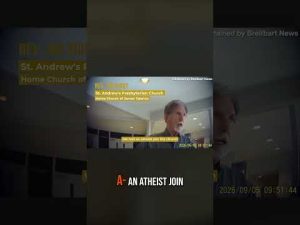
In a striking event highlighting the conflict between conservative values and the rising tide of secularism, a Presbyterian minister took center stage, speaking at the Freedom From Religion Foundation. This gathering, known for its unapologetic rejection of religious influence in public life, showcased a troubling trend creeping into religious circles worldwide. The minister, seemingly caught between his faith and his alignment with non-theism, raised eyebrows as he espoused ideas that contradict the fundamental beliefs of most traditional religious communities.
Throughout the speech, the minister expressed his fondness for working with non-theists, suggesting a disturbing shift in the values espoused by some within religious institutions. He emphasized love for humanity and nature while declaring a lack of need for a traditional God. This philosophy is alarming for conservatives who believe in the importance of faith as a guiding principle in everyday life. Rather than holding firmly to religious convictions, this minister illustrated the growing trend of faith leaders who seem more interested in appeasing secular ideologies than defending core religious tenets.
Furthermore, the minister’s mention of trials within his denomination over issues like LGBTQ rights and abortion reveals a critical battle within religious communities—one that conservatives must pay attention to. These topics are not just social debates; they represent a deep ideological divide that threatens to undermine the foundations of belief systems cherished by many. The fact that an atheist could feel welcomed in his church demonstrates a concerning dilution of what it means to be part of a faith community. For many conservatives, such actions signal a disturbing compromise of values, reducing once-sacred institutions to mere social clubs devoid of deep-rooted conviction.
As he casually discussed the idea of worshiping nature as an alternative to God, the minister inadvertently revealed the potential pitfalls of abandoning traditional beliefs for more modern, non-theistic ideas. This shift not only raises questions about the future of religious institutions but also highlights the growing acceptance of secularism in spaces once thought to be bastions of faith. It is a stark reminder of the battle for the soul of America, where the rejection of God is becoming alarmingly normalized.
In conclusion, the discourse presented at this event showcases a critical moment for conservative values and religious integrity. As society grapples with an increasing number of voices championing secularism, conservatives must remain vigilant. It is essential to uphold the traditions and beliefs that have provided moral clarity throughout history. The testimony of faith leaders must be rooted in the strength of their convictions, resisting the lure of secular acceptance, for the future depends on the unwavering defense of these vital values.