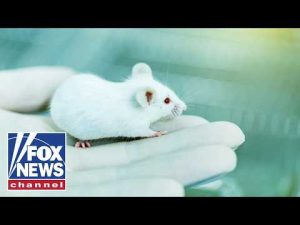
In a story that sounds more like science fiction than reality, scientists at Stanford University have embarked on an experiment that involves placing human brain tissue into mice. Now, before everyone starts envisioning mouse armies exhibiting human intelligence plotting world domination, let’s break it down. These aren’t brain bits surgically removed from any human, but lab-grown human brain cells grafted into genetically engineered mice. The rationale for this Dr. Moreau-like endeavor? To study brain disorders such as autism and schizophrenia in a way that’s supposedly more ethical than any alternative available.
The talking heads in lab coats are quick to assure everyone that this approach allows them to study the human brain in a live model, more so than a cluster of cells in a petri dish could provide. There’s a certain scientific allure here: observing how the human brain develops in a dynamic, living organism, albeit an organism that scurries around avoiding mousetraps. The overarching hope is to pave the way for groundbreaking treatments for neurodevelopmental disorders. So, in a sense, these scientists are playing a high-stakes chess game with ethics and human biology to potentially cure those brain disorders.
However, stepping into this brave new world isn’t without its eyebrow-raising ethical questions. For instance, the mice housing the human brain cells are only allowed to live up to six months. This cutoff is intended to prevent the possibility of the mice gaining any human-like awareness or cognitive ability. As the ethical implications of such experiments are navigated, it seems that science fiction’s “Island of Dr. Moreau” isn’t all that far-fetched anymore.
While all this high-brow biology is unfolding, another issue rears its head in the form of a more immediate threat: rabies. It seems that ‘Man vs. Wild’ has turned into ‘Man vs. Unexpectedly Rabid Animals,’ with strange cases popping up in Maryland and even at petting zoos in North Carolina. Visitors cherished a day of frolicking with goats, only to find out they were interacting with rabies-infected animals. It’s enough to make anyone rethink the next petting zoo outing.
Now, the Centers for Disease Control have chimed in with their own warning as cases of exposure rise, even though the jury’s still out on whether actual rabies rates are climbing. The moral of the story? Stay alert and get treated immediately if you play tag with an animal that may have rabies. By contrast, the hodgepodge mixture of scientific experiments and unexpected rabies cases offers up a vivid slice of modern dilemmas. Whether in the lab or on the farm, these stories serve as curious reflections on humanity’s progress and the sometimes peculiar intersections science and nature present.