### Unpacking the Complexities of Islam: A Brash Debate on Religion and Politics
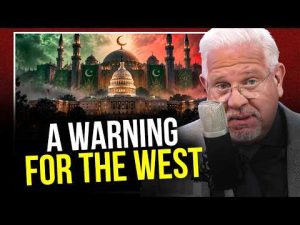
In a riveting discussion making waves in conservative circles, a former Muslim and the CEO of the Ideological Defense Institute, Danny, is stirring the pot by contending that Islam is not merely a religion, but rather a political movement that embeds a religious framework within itself. This provocative assertion has opened a floodgate of differing opinions, as many grapple with the idea that Islam transcends the bounds of traditional faith systems and becomes intertwined with governance and societal structures.
Danny asserts that when contemplating Islam, one should think not just of personal beliefs, but of nations and political systems, likening it to the governance in the United States, France, and even China. He boldly claims that Islam operates under a constitution of its own—Sharia law—while simultaneously proposing a comparison between Muslims in America and citizens of any nation. This perspective raises eyebrows and questions about the role of religion in politics, sparking lively debates among both supporters and detractors.
Some of the most fervent exchanges center around the perceived threat posed by radical elements within the Muslim community. Danny, along with commentators from the conservative media sphere, express grave concerns about even a small percentage of Muslims—a mere 1% of the approximately 5 to 6 million Muslims in America—who they claim could be committed to a fundamentalist interpretation of Islam. This alarming concept translates to a staggering number of potential radicals, estimated to be around 50,000 individuals residing in the U.S. The implications of this assertion provoke chills, as they evoke thoughts of real-life terror plots, including a foiled attack involving a man who had converted to Islam and was determined to commit violence in support of ISIS.
Interestingly, the dialogue doesn’t merely vilify those who identify as Muslims. Instead, it distinguishes between those committed to radical ideologies and the broader Muslim population, many of whom are depicted as turning a blind eye to the tenets of their faith. There’s an acknowledgement that while not all Muslims subscribe to extremist views, those who convert to Islam often do so with a fervor that poses risks if their beliefs align with radical factions. This creates a dichotomy between the peaceful majority and the dangerous minority that the discussion seeks to outline—a delicate tightrope to walk in ensuring that criticisms do not paint the entire faith with the same brush.
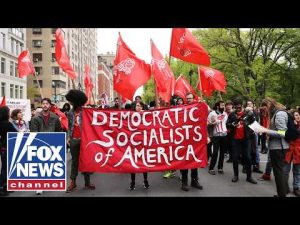
The conversation takes a fascinating turn when Danny draws parallels between Islamic doctrine and Marxism, suggesting that both ideologies, despite their own distinct beliefs, share a common goal of overthrowing systems of governance that oppose their core principles. He argues that both movements harbor individuals willing to go to great lengths for their beliefs, igniting fears about the fusion of radical ideologies that may very well become a threat to democratic values and structures. The crossfires of political and religious ideologies, as he suggests, create not only tension but potential for conflict—especially when those ideologies demand unwavering loyalty from their followers.
As the debate delves deeper, it raises fundamental questions about freedom and the relationship between religious beliefs and a citizen’s loyalty to a nation. The proponents of this perspective warn that unless Americans recognize the dangers lurking within radical interpretations of Islam, they risk underestimating the seriousness of this political-religious interface. Ultimately, the discussion challenges citizens to confront the complexities surrounding faith and governance, compelling a reconsideration of how society engages with and understands different belief systems in an ever-evolving world.
Thus, the dialogue surrounding Islam as a political entity rather than purely a faith continues to unfold, igniting spirited conversation while challenging preconceived notions about religion, radicalism, and national identity. While the debate may leave many feeling perplexed or on edge, it remains crucial in navigating the treacherous waters of modern political discourse—where ideologies clash and the stakes are undeniably high.