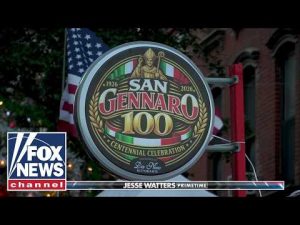
In the bustling streets of Little Italy, New York City, an annual celebration marks a significant milestone: the 100th anniversary of the Feast of San Gennaro. The festive atmosphere is a vivid reminder of the vibrancy and tenacity of the Italian-American community. Yet, as this centennial unfolds, there’s a spirit of reflection and readiness in the air, especially when imagining how the gritty, no-nonsense Italians would handle modern-day global dramas.
Take, for instance, the talk of current international quandaries. Some locals playfully suggest that if Italians were in charge, dealing with a hot-headed nation like Iran would be straightforward, albeit with a unique twist. One enthusiastic festival-goer insists that a hearty Italian meal could solve any conflict. Just imagine the hearty welcome that a freshly baked pizza and a persuasive look could achieve! Italians in Little Italy are known for their candid humor, and this crowd doesn’t shy away from saying that, sometimes, a bit of pizza can disarm any adversary.
Of course, what Italian gathering would be complete without a touch of regional sarcasm? Attention is turned to the current state of New York City’s infamous rat problem. Suggestions from the crowd range from dismissive shrugs (because who among them would bother with rats?) to forceful solutions. Nothing beats a properly wielded hammer, it seems. After all, in a city full of hustle and bustle, sometimes a straightforward approach is best, leaving the complicated nonsense for the bureaucrats.
The topic of artificial intelligence also enters the fray, sparking a blend of humor and skepticism. The fear of an AI uprising, a plot swiped straight from the latest sci-fi script, meets the classic Italian disdain for over-the-top drama. When it comes to robots, the sentiment is simple: they might be able to compute thousands of equations per second, but until they can whip up a decent fish salad, they’re just high-tech paperweights. The enduring Italian spirit, combined with a love for practicality, just can’t take the threat of futuristic machines too seriously.
In the midst of lighthearted banter and cultural pride, there’s a game played with a little mockery and a lot of heart: labeling famous figures as “Stunad” or “Moto Ben”. For the uninitiated, “Stunad” is a playful jab, while “Moto Ben” signifies admiration. With easygoing jest, names are tossed around like political footballs. Some, like Columbus, are hailed as heroes—a nod to the enduring Italian-American narrative—while others garner less favorable titles.
As the festivities carry on, it becomes clear that while Italians might love to gather and share, they’re not about to buy into any collectivist ideals like communism. Their celebrations are about community, yes, but also individuality, where sharing food doesn’t mean sharing ideology. It all wraps up with cheers and laughs, proving that even in a serious world, a festival—especially one fueled by Italian vigor—can remind us of the simple pleasures of food, family, and a hearty dose of wit.