As the world turns its gaze toward the ongoing conflict between Russia and Ukraine, it seems that old tensions have found a new stage to play out. President Trump, poised to meet Ukraine’s President Volodymyr Zelensky on the sidelines of the United Nations General Assembly, is perhaps hoping that a handshake and some stern words might bring this complicated saga to a neat conclusion. Alas, international politics isn’t quite as tidy as a game of golf at Mar-a-Lago.
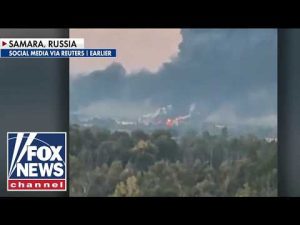
While Ukraine and Russia are busy exchanging diplomatic niceties alongside deadly strikes, the backdrop is one of high drama. Ukraine’s bold overnight move to damage a Russian oil refinery—right in Russia’s backyard—was certainly not a display of shying away. This daring raid lit up the skies southeast of Moscow, just as it seemed Zelensky was burning the midnight oil, planning his own diplomatic strikes in New York. At the same time, Russian forces were busy sowing chaos in Ukraine, targeting both industrial areas and residential neighborhoods, leaving destruction and despair in their wake. The scenes of power outages and casualties paint a grim picture for a people who might only wish for peace and a return to normalcy.
Amidst the chaos, Vice President JD Vance, in an optimistic tone, reminded everyone that progress is always possible—though, in this swirling maelstrom of geopolitics, optimism might be an acquired taste. President Trump, known for his candid spice on social media, was quick to bemoan the war’s impact on the diesel oil industry. As fuel prices climb, he hinted that peacetime might make for a much more affordable fill-up at the pump. It is, after all, a war of many fronts, where the quiet struggle at the gas station is playing out alongside the thunder of artillery fire.
The concept of a ceasefire targeting energy infrastructure has been floated—a great leap toward sanity, albeit one that requires both countries to simply say yes. In today’s fractured world, getting adversaries to agree on anything seems about as likely as Congress agreeing on lunch. The hurdles are apparent, as the deceptively simple idea ignores Vladimir Putin’s dreams of a reunited Soviet Union, a ghost he attempts to resurrect through force rather than negotiation.
It would be nice if Ukraine could give up a few meters here and there and call it a day, but the reality involves a complex web of regional control that would give even seasoned cartographers a headache. As Russia tempts North Korea into supplying additional manpower and missiles to aid its cause, the global stage becomes ever more crowded. One wonders if Putin is confusing the battlefield with a particularly stubborn chess game—one where he just keeps adding extra pawns.
With NATO bracing at the borders, and diplomats doing their best impression of circus acrobats, the world watches, waits, and weathers the storm. Meanwhile, those who remember the tight grip of communism warn of what’s at stake, reminding us all of the value of choice, freedom, and perhaps a little common sense. As President Trump and President Zelensky prepare for their tête-à-tête, one can only hope that these stalwarts can somehow poke a hole through the thick fog of war.