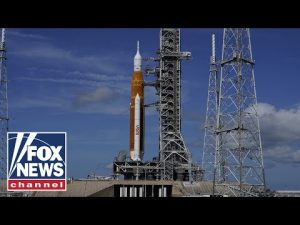
In an era where one might think we’ve seen it all, America proved once again that it’s never quite done with jaw-dropping feats. One of these spectacles was the triumphant splashdown of the Artemis 2 mission’s spacecraft, Integrity, returning its astronauts safely to Earth after a ten-day sojourn nearly 253,000 miles away. Now, while some might find that distance trivial compared to a typical family road trip that only feels like one never ends, it’s truly monumental when considering the scope of space exploration. This achievement marks the farthest humans have ventured from our little blue planet. The high-fives in the flight control room were as much about celebrating a technical success as they were about reaffirming American exceptionalism.
Retired NASA astronaut and former Marine aviator Andrew Allen might just be the poster child of enthusiasm for this historic landing. He was visibly buoyed by the news and not just because he’s nostalgic for the days he wore the spacesuit himself. This mission stands as a tribute not just to the astronauts, but to an America that still dreams big. Allen highlighted how this wasn’t an isolated act of government indulgence but a fascinating harmony of large corporate giants and small-town mom-and-pop shops working together. It’s like a cosmic bake sale where everyone chips in and, somehow, instead of cookies, America gets a space mission.
With the excitement barely settled, eyes are now firmly fixed on forthcoming missions Artemis 3, 4, and 5. These missions are touted as ambitious, perhaps as bold as deciding to order dessert when the main course isn’t even over yet. Plans are in motion to test lunar rovers and cement a human presence on the moon by 2028, with whispers of starting a moon base by then. Talk about ambitious; they didn’t even pause to catch their breath! With the financial backing being a fraction of the cost of the Apollo program, Artemis aims to prove that Americans can achieve more with less—something many wish Congress would figure out, perhaps starting with the national budget.
Of course, the naysayers are out there, waving their flags of fiscal conservatism, arguing the funds could better serve earthly problems. However, Allen’s rebuttal is as firm as an astronaut’s space helmet. He asserts that every penny is spent on terra firma, employing thousands, driving technological innovation, and offering returns that might not always be quantitative but are certainly qualitative. The broader impact, Allen suggests, is the spiritual lift, the inspiration for the next generation. After all, he contends, who hasn’t watched generations get lost between reality television and viral cat videos? This mission’s success is a call to arms for the dreamers and doers captivated by the cosmos.
As the dust settles—or the sea spray, as it were—reactions pour in from all walks of life, celebrating this venture’s success and eagerly anticipating the mysteries yet to be unfolded by future Artemis missions. Let’s hope Congress remains as inspired not just by the moon-landing nostalgia but by the motivation to continue this onward journey—ideally without needing a GPS reroute en route to economic, scientific, and inspirational greatness. After all, the odds of finding a new supply of government foresight on the moon remain slim, though undeniably, space has proven to be a realm where anything, and everything, seems possible.