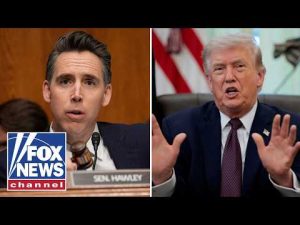
As President Trump’s chopper touches down in Geneva, the world watches with bated breath, awaiting the details of yet another controversial international agreement—this time involving Iran. The memorandum of understanding that everyone’s buzzing about has some scratching their heads in disbelief. We had Iran economically strangled with a vice grip of sanctions, and now this deal seems to open the floodgates for nearly limitless shenanigans. Who knew that “down blending” could stir up such a whirlwind of concern? Down blend today, up blend tomorrow—it’s a chemistry experiment gone awry, governed more by political expediency than sound policy.
Trey Gowdy, one of our favorites with his legal mind and Southern charm, shared his bewilderment on the situation. He expressed almost incredulous surprise that while we had our proverbial foot on Iran’s throat, there now seems to be a sudden change of heart seemingly more attuned to the rhythm of approaching midterm elections than national security. And let’s not forget the midterms—always a splendid time for international agreements, right? Call it a coincidence, or perhaps just classic Washington D.C. political theater, complete with a troupe of seasoned actors and a script filled with ambiguous dialogue and questionable plot twists.
The lack of clarity around monitoring Iran’s compliance is concerning, to say the least. The International Atomic Energy Agency and, goodness gracious, the United Nations are supposed to oversee compliance. Yes, the same United Nations that has a robust history of sternly worded letters as its primary weapon of enforcement. But as we’ve come to understand, definitive action is just another line on the long scroll of bureaucratic red tape. Maybe in a parallel universe, the IAEA and the UN are beacons of decisiveness, but here on planet Earth, that idea seems more science fiction than reality.
While sipping his morning coffee, Gowdy mused about our intelligence community—the best in the world, as he reminds us. They could spot an unauthorized uranium enrichment from a thousand miles away but might need to be in the loop on how this MOU magically spins straw into gold. Iran’s strategic waiting game—the political chess match of this era—suggests they might just be biding their time until the winds of U.S. leadership change in 2029. Iran could well cash in on newfound economic opportunities facilitated by the same people who should be winning this geopolitical poker game.
The lifting of the naval blockade and the freeing up of billions in Iranian assets could seem like capitulation to Iran’s government. Perhaps we’ve become too charitable; what was once adversarial is now awash with naivety wrapped in diplomatic niceties. Meanwhile, soldiers who bled on the battlefield are left wondering where the gratitude fund for their sacrifices is. All in all, this script reads more like a tragicomedy than the clear-cut victory that was expected. If Iran comes out of this richer and more influential, some may ask if the price of diplomacy was worth the cost. A curious tale this is indeed, and the world waits with a raised eyebrow to see how this narrative unfolds.