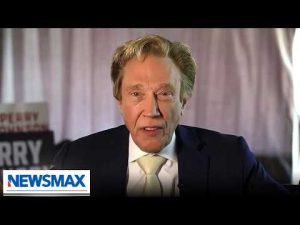
In the bustling backdrop of New York politics, the Nassau County Executive, Bruce Blakeman, has emerged as a voice of dissent against the city’s current leadership. With aspirations for the governor’s office, Blakeman is on a mission to tackle what he perceives as mismanagement and divisive policies spearheaded by Mayor Zoran Mandami and Governor Kathy Hochul. During his recent appearances across the state, Blakeman has been quick to express his belief that these leaders are fanning the flames of class warfare rather than uniting the community.
Blakeman argues that Hochul and Mandami’s approach to high-net-worth individuals serves only to push them out of New York, leaving the burden of taxation on the middle class. He notes that the state has already lost a staggering $11 billion in revenue from individuals who have chosen to relocate to friendlier tax climates. This mass exodus, he claims, has a domino effect that harms local businesses, including plumbers, electricians, and service industry workers. Instead of driving potential residents away, Blakeman believes the state should be rolling out the welcome mat for those who can contribute significantly to the economy.
An underlying theme in Blakeman’s rhetoric is the accusation of growing anti-Semitism and anti-Christian sentiment among the new Democratic leadership. He highlights Mandami’s apparent neglect of cultural events and institutions important to the Jewish and Christian communities. The mayor’s decisions, such as skipping the installation of the new archbishop and canceling significant community events, have sparked discussions about his commitment to the very communities that have historically supported New York’s Democratic Party. Orchestrating a backlash against these communities, Blakeman posits that the leadership is increasingly at odds with long-time supporters.
As Blakeman travels the Empire State, his message of fiscal responsibility resonates with an electorate increasingly concerned about high taxes and poor governance. He claims that New York is the most overtly taxed state in the nation, with prohibitive electric bills that rank 50th in economic outlook. Blakeman’s campaign message revolves around a promise to lower taxes and cut electric rates, aiming to provide more financial freedom to New Yorkers rather than leaving their well-being in the hands of government.
Despite the challenges of running in a predominately blue state, Blakeman’s campaign appears to be gaining traction, with recent polls showing a competitive race. His strategy focuses not only on exposing the failures of the current administration but also on presenting a clear vision of hope and economic rejuvenation. In a twist of irony, he notes that while New York has often been considered a stronghold for Democrats, this competitive race could signal a significant shift in voter sentiment—a trend of voters waking up to the realities of their governance and seeking a change in Albany.
In summary, Blakeman’s candidacy represents a burgeoning dissatisfaction with the status quo in New York’s political landscape. As he continues his campaign, he champions the cause of middle-class families while taking a firm stand against what he calls the troubling policies of the current city and state leadership. If he can effectively rally support around these issues, who knows—New Yorkers may soon find themselves on the path to restoring common sense and fiscal sanity in their beloved state.