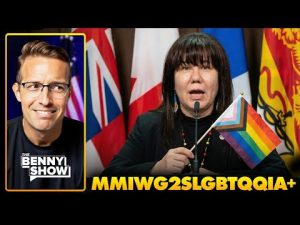
The world seems upside down when a Canadian politician sparks controversy by complaining about budget cuts affecting a long list of seemingly alphabet soup acronym groups. Leah Gazen, in all seriousness, voices her frustration at Canada’s Prime Minister slashing $7 billion from Indigenous Services and Crown Indigenous Relations. But her cause reaches new heights when she claims there’s an ongoing genocide of a collection of people referred to by a mind-boggling array of letters. It sounds more like a Gmail password that’s impossible to remember.
It’s impressive, almost amusing, that someone can commit so much brainpower and memory to rattling off this assortment of letters with sincerity. One can’t help but wonder how much intellectual energy is dedicated to just keeping track of the latest labels and buzzwords in the progressive playbook. These are labels and buzzwords that supposedly define the victim groups in various intersections of identity. Imagine the world-changing potential if that memory was dedicated to something more tangible than this abstract exercise.
The complaints stem from the notion that Canada is ostensibly turning its back on victims of a genocide some claim is occurring against MMIWG2S+ (missing and murdered Indigenous women, girls, two-spirit, and others). However, one may question the assertion of genocide when the group in question includes those who have already faced tragic ends. The notion that deceased individuals are part of an ongoing genocide is a confusing one. It seems redundant—not to mention a bit frustrating for the victims to now be spotlighted as part of a trendy social cause posthumously.
Adding to the complexity is the political move to align budget priorities toward military spending, a far cry from the woke agenda some advocate. Progressives might find this alarming, but it raises an interesting dialogue about national security and its importance. After all, genuine national coherence and strength come from defending its borders and ensuring safety for all its citizens, not just prioritizing niche interests.
In today’s world, buzzwords and acronyms pile up on one another like a never-ending alphabet soup, bypassing real-life problems and creating debate over hypothetical ones. It’s as if everybody races to use up more letters in the LGBTQIA+ community for social clout. The sad truth is that while some may find empowerment in these labels, others are left puzzled, pondering why identifying with such intricate descriptors is necessary.
So, reflect on these matters not with despair but with a strong stance that questions logic while upholding the values of common sense and practicality. Push for discussions that prioritize not only the rights of citizens within any identity group but also highlight universal issues that affect all. Wokeness might just well be the self-inflicted wound of progressivism—ailing from the tangled mess it creates and the irrational demands it places on society.