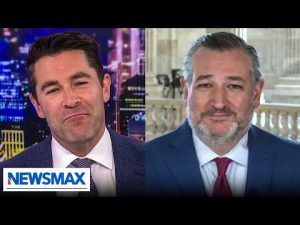
In a dramatic showdown that feels more like a scene from a courtroom drama than a political event, a certain politician is finding himself in a tangled web of accusations and a growing number of raised eyebrows. The allegations are heavy, with claims that this individual accepted a substantial donation just days after a crucial meeting, all while apparently denying his involvement. It has raised the question of whether he is playing chess while the rest of the world is playing checkers—or if he simply has no idea how the game is played at all.
The crux of the accusation revolves around a $10,000 donation that came in nine days after a meeting that certainly caught the attention of those keeping a close watch. Critics have labeled this exchange as indicative of corruption or at least deep ethical concerns. With recorded conversations dropping like confetti at a parade, it appears that the truth may not be hidden for long. It’s almost as if the entire situation calls for a courtroom sketch artist rather than a reporter, as the dramatic performances and finger-pointing unfold on air.
As evidence mounts, one can almost hear the collective sigh from constituents who feel left in the dust while politicians engage in what seems like a game of monetary chess. Questions arise: What did this politician expect? Did he assume that his conversations would remain private? The outrage seems palpable, with pundits tossing around terms like “dead to rights,” as they delve deeply into the details. They argue that turning a blind eye to such allegations sends a dangerous message that corruption might be tolerated, and who wants that?
One compelling point of discussion is the supposed involvement of officials in allowing significant sums of money—an astronomical $9 billion, to be exact—to slip through the cracks. Pundits are furious, insisting that there needs to be accountability for those who mishandle public funds. There’s a chorus of voices calling for this politician to face consequences. Many assert that constituents deserve to see their leaders held to high ethical standards, and they are ready for action.
The implications of this scandal stretch far beyond a single politician’s career; they touch the very core of public trust in government. People are clamoring for a more transparent political landscape, where actions are not only scrutinized but also answered for. As the pressure builds, the hope is that justice prevails. After all, the American public wants to see not just rhetoric but decisive action taken against those who are perceived as having misused their power for personal gain. If nothing else, this event serves as a reminder of the importance of keeping ethics at the forefront of political life, ensuring that when it comes to serving the people, there is no room for missteps—or misdeeds.