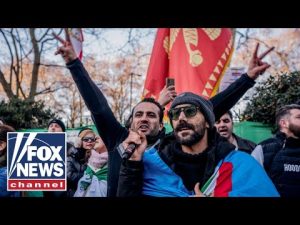
Once again, Minneapolis finds itself at the center of a swirling storm of protests and controversy. This time, the scene unfolds in front of a federal building, with protesters gathered to express their dissatisfaction with the presence of Department of Homeland Security (DHS) agents and U.S. Immigration and Customs Enforcement (ICE). The protesters, armed with chants and placards, accuse these agencies of wrongdoing, specifically targeting them with claims of violence against their community. They even go so far as to label the federal agents “murderers” for allegedly killing a neighbor who was, according to them, innocently ensnared in an ICE operation.
These accusations are quite serious, but what’s the story from the federal perspective? Federal agents claim this “innocent” neighbor was actually using her vehicle to obstruct an active operation, hardly the picture of innocence the protesters want to paint. It’s a peculiar strategy indeed—block a law enforcement operation with a car, then act shocked when there are consequences. The White House promptly reminds everyone that obstructing federal investigations and physically engaging with agents is, quite simply, illegal. Yet, such reminders seem to fall on deaf ears amidst the frenzy of protests.
On this particular day in Minneapolis, the air is tense. The men in camo, part of the Border Patrol, stand visible in the backdrop, ensuring that things don’t get further out of hand. The local law enforcement, seemingly absent or apathetic, forces DHS to fend for itself—a position not unlike a referee left without backup during a barroom brawl. Arrests have already been made, and the number might grow, much like the tempers of those gathered in protest. As emotions oscillate between calm and chaos, the agents brace themselves for whatever might come next, be it a dance-off or more serious interference.
The protesters carry a sense of empowerment, perhaps buoyed by the mild words of cooperation—or lack thereof—from city officials. When the mayor himself suggests ICE hit the road, it’s no surprise that those gathered feel emboldened to make their presence and feelings known. Meanwhile, the governor’s soft exhortation to “behave” doesn’t quite echo with the stern authority one would expect to diffuse such a situation. It’s a political message as effective as asking a cat not to chase the mouse.
Reflecting on the events of the day provokes thoughts reminiscent of 2020’s unforgettable marches and protests. Will history repeat itself in Minneapolis, or will cooler heads prevail to bring a sense of resolution? Only time will tell, but until then, the scene remains one of anticipation and uncertainty. Meanwhile, the unsung lesson remains as old as time itself: when asked politely by those in uniform, step aside, and step wisely out of the way of federal operations. Live to protest another day.